
Growing Onions
Growing onions is a long process from seed but may be worth every effort. Onions are an easy beginner plant to try. I have tried growing onions from seeds, sets, and starts. Starts are the easiest but probably the most expensive. Sets are not too expensive but never worth the end result. Seeds are the most cost effective and can have amazing results. Onions can be directly planted into warm soil in the spring but are best started under a grow light for big bulbs in growing zone 5.
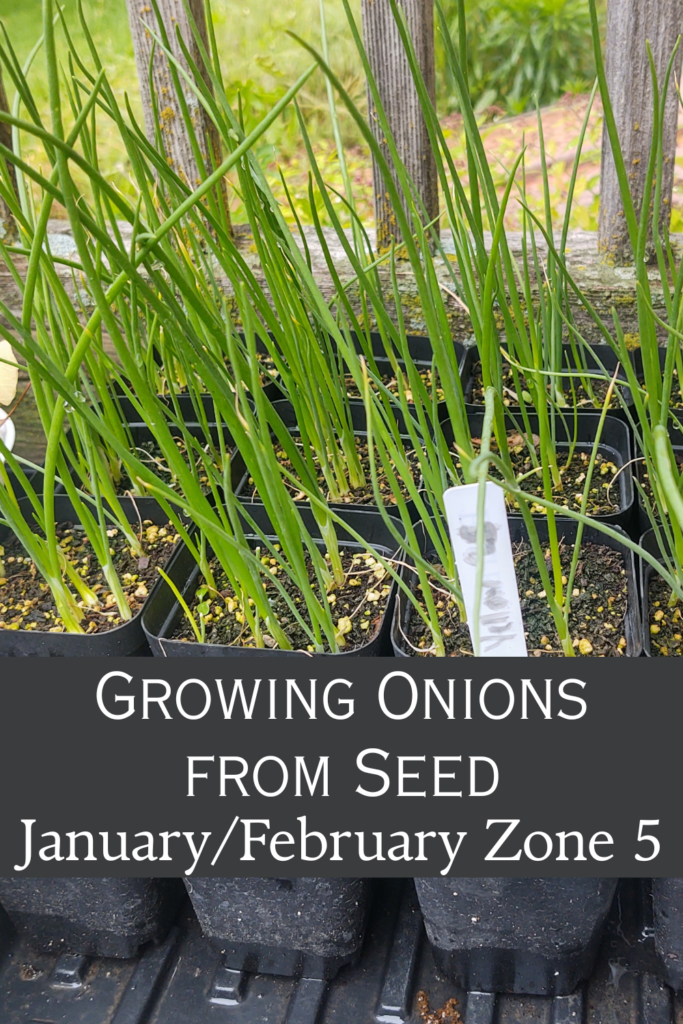
Onions need to be started in January if possible and as late as February 15th in zone 5 for best results. The seeds take around 8-10 days to germinate or sprout. Then they need to be grown indoors for 8-10 weeks before transplanting outside. After transplanting, onions can take all summer to grow big bulbs. Depending on the type of onion planted, they take a total of 120 days to harvest.
What are Sets and Starts?
Onion sets can be bought at most gardening stores. They are basically small onions that have been over wintered. They come in a mesh bag with a handful or two of somewhat dried onions. These onion sets are simply planted into the dirt and then start to grow with warm sun and water. The problem with sets for me, they never get to be big onions worth saving. This is due to the fact that onions like to grow big bulbs, then grow a large flowering stalk to produce seeds the following year. So if I buy an onion set that is from last year, the onion that has overwintered will only want to grow big enough to produce flowers and seeds.
Onion starts can be bought from garden stores and nurseries. Starts are when someone has already started the onion from seed, then sells the pre-started onions as a bunch to you. Now, this is a great option if you have no means to start onions from seed or didn’t start your onion seeds soon enough. They can be pricey but are easy to plant. Simply poke a hole, drop the onion start in, put back the dirt and water in. For me, starts are too pricey. I can buy way more seeds and start them myself for less then half the cost.
Starting Onion Seeds
I like to grow onions from seed to save money. Seed starting does take time. For more information on seed starting, visit my seed starting guide. Where I list the grow lights, containers and soil mix I use.
Gather containers, trays, seeds starting medium, water and onion seeds. Fill 3-4 inch tall containers up with soil mix and lightly tap the container down to flatten the soil. Place containers in a tray for easy transport and watering.

Sprinkle 10-12 onion seeds or 14-20 bunching onions seeds on top of the soil.
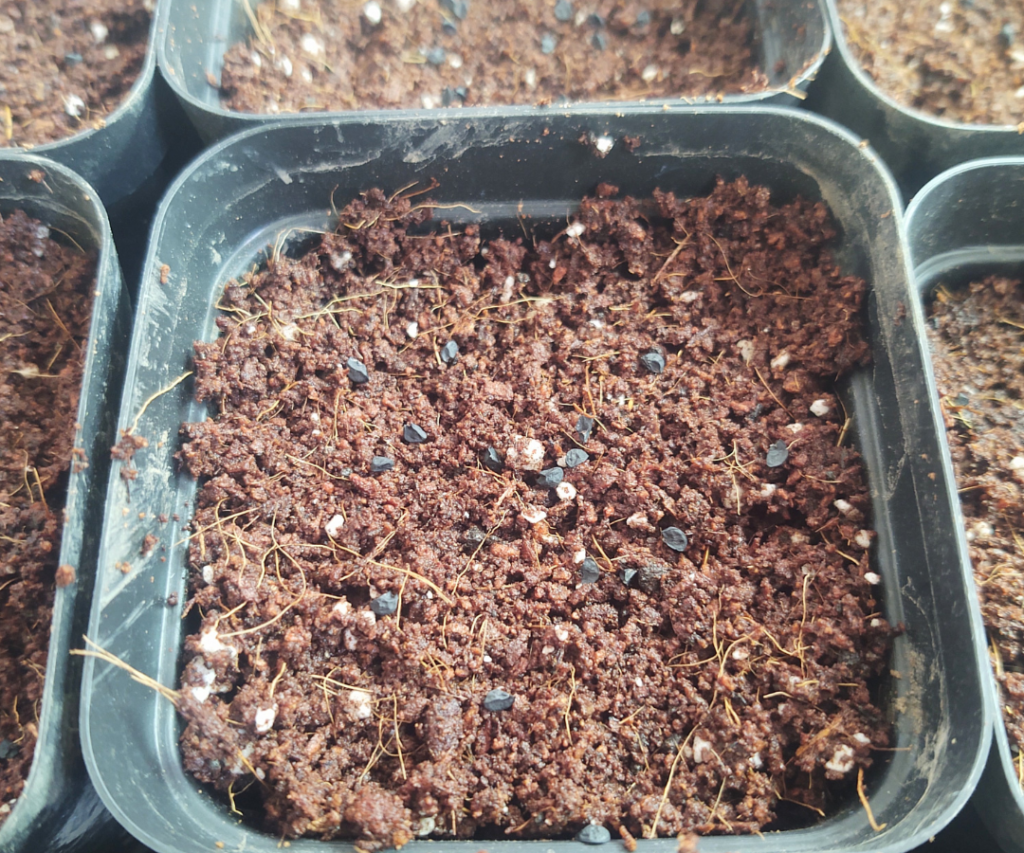
Place about 1/2 of an inch of soil over seeds and press soil to make contact with the seed. Try not to compact the soil down, just enough to have the top layer firm for the seeds to not move around during watering.
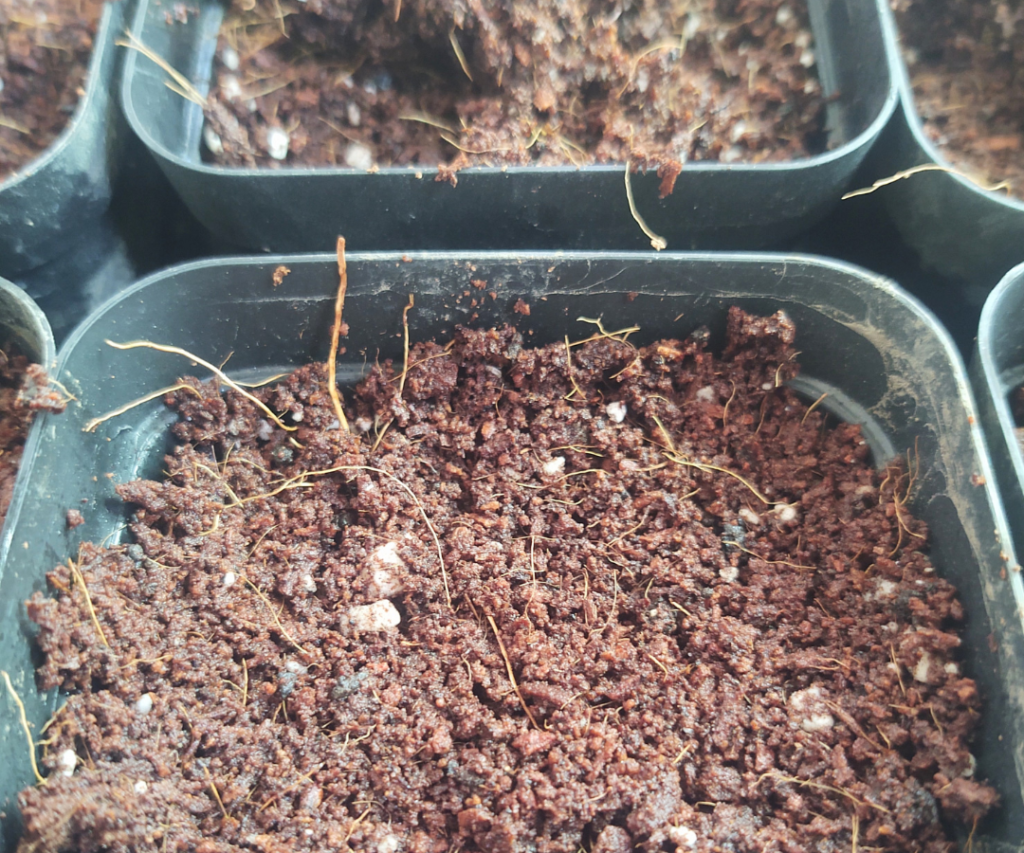
Spray with a misting watering bottle. Cover with a plastic wrap.

Place 2-3 inches away from a grow light until sprouted, misting with water as needed to keep soil moist while seeds germinate. I use a timed multi-plug outlet for my grow lights, set to turn on around 6am and off at 8pm.

Take plastic wrap off and start to bottom water after sprouts have formed.
Fertilize with a fish emulsion every 3 weeks. Keeping a fan blowing lightly will help prevent flies and algae growth.
As the sprouts turn to seedlings, start to move the grow light up away from them. Lights too close will “burn” the delicate seedlings.

The onions will start to grow long green leaves. Allow the leaves to get 4-5 inches long, then trim back to 2-3 inches down. Use the leaves as you would in cooking with chives. Trimming leaves is important to keep the bulbs growing.
By the time the onions are ready to transplant, they should be as thick as a pencil. Now you have made your own onion starts!

Transplanting Onions
Transplant onion starts after danger of frost has passed. In zone 5, our frost can be until May 15th. Simply poke holes into the ground 3-4 inches apart. Place onion start into the hole up to the natural grow line from the container. Fill dirt back in around the onion and water thoroughly.
Caring for Onions
Allow for the soil to dry up around the onion before watering again. Onions like soil that has been deeply watered but not soggy once bulbs are forming, about 1 inch of water per week. Watering too much or allowing to dry out for too long before watering might cause a split bulb.
Allow for plenty of sunshine and keep weed free. They do not need much to grow well. When onions are about 8 inches tall, feed with a fish emulsion fertilizer by watering the green tops. Stop watering once tops have turned brown.
Harvest once onion tops have fallen over. Allow onion to dry or cure in a dark humid room for 2 weeks before storing.
Companion Planting
Onions are great companion plants. They repel many pests due to the strong smell. I plant with carrots to confuse carrot rust fly. Try planting in-between carrots for best results. Onions can also be planted randomly to confuse rodents looking to snack in the garden.

Types of Onions
There are 3 types of onions to choose from with many varies in each group. In zone 5, I will plant long day and day neutral onions. My favorites are Tokyo Long White, Yellow Sweet Spanish and Red Wethersfield.
Long day onions are grown best in the upper half of United States, zones 6 and up. These onions love long summer days in a shorter growing season. Onion varieties include; Alisa Craig, Copra, Red Wethersfield, Red Torpedo, Walla Walla, White Sweet Spanish, and Yellow Sweet Spanish. Yellow onions tend to store for longer, while red types are best eaten fresh but can store for a few weeks,
Short day onions are grown in the lower half of United States, zone 7 and below. These onions love shorter summer days with a longer growing season. Onion varieties include; Sweet Red and Vidalia. I wouldn’t recommend these for zone 5 unless you have a growing tunnel or greenhouse.
Day neutral onions are grown right along the middle of the States like zones 5-7. These onions seem less picky about long or short daylight, however, they do usually take 110 days to harvest unless using as a bunching onion. Onion varieties include; Candy, Cimarron, Red Stockten, Super Star and Tokyo Long White (bunching onion).


One Comment
Pingback: