
Sauerkraut (lacto fermented)
Homemade sauerkraut has a tangy spice and salt flavor. It is cabbage that has been fermented in a salt brine made from the juices the cabbage naturally makes. Sauerkraut is packed full of nutrients and probiotics that help heal the gut and strengthen immunity. It may even help improve heart heath, reduce heartburn (GERD), and support brain function.

Preparing the Cabbage
Start with a clean head of cabbage. Any color works fine but regular green cabbage is the go-to. I will usually do half of a head of cabbage at a time, using the other half for a meal.
Shred up the cabbage into bite size pieces.
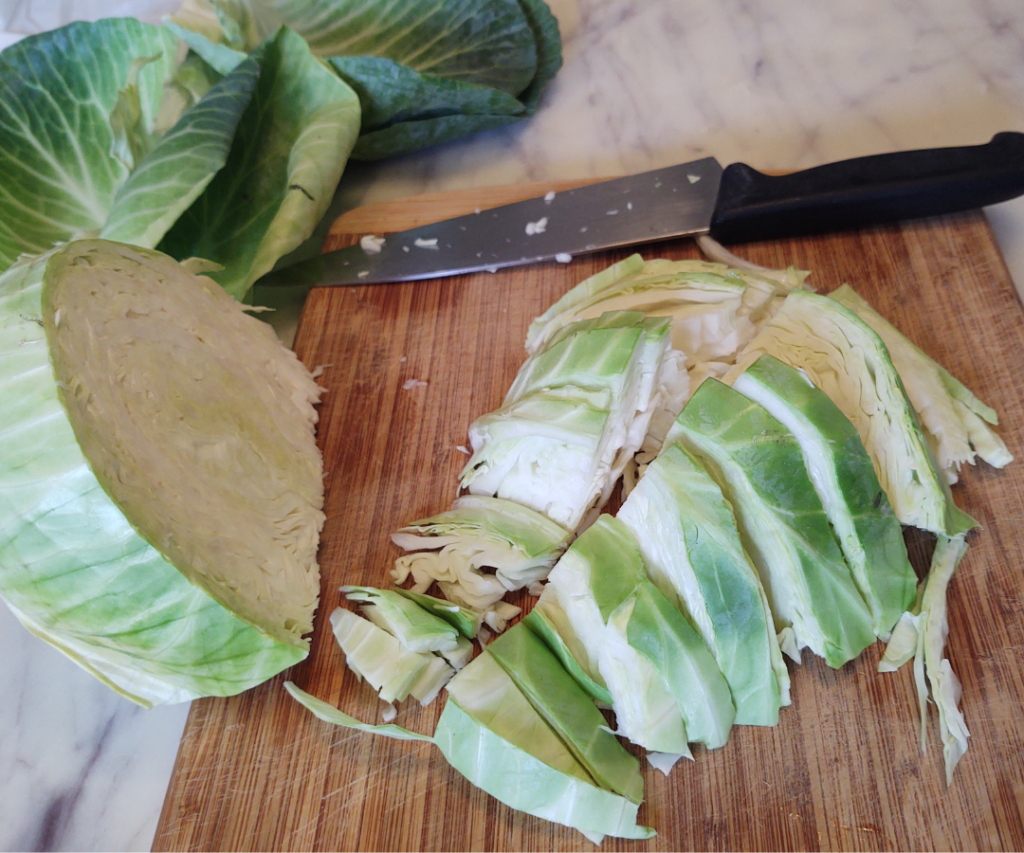
Place into a large bowl or pot.

Fermenting Cabbage
Sprinkle on 1 tablespoon of salt for each half of a head used. For a full head of cabbage, use 2 tablespoons of salt.
I use Redman's real salt or sea salt.

Let the salt sit on the cabbage for a few hours. Every once and a while, mix up the cabbage and work the salt into the leaves.

The cabbage will naturally release liquid. This liquid and salt creates the natural brine the cabbage sits in to ferment. Try to keep the cabbage below the liquid to prevent browning and spoiling.

After at least 2 hours, I will transfer mine to a large mason jar and press down the cabbage as tightly as I can.

The liquid naturally covers the cabbage, but if any floats, hold it down with a glass weight or folded up piece of cabbage leaf. I like these mason jar weights.

Cover the cabbage brine mixture with a loose lid and/or tea towel to prevent insects from getting in. Allow it to ferment for at least 24 hours to 6 weeks on the counter.
Sauerkraut
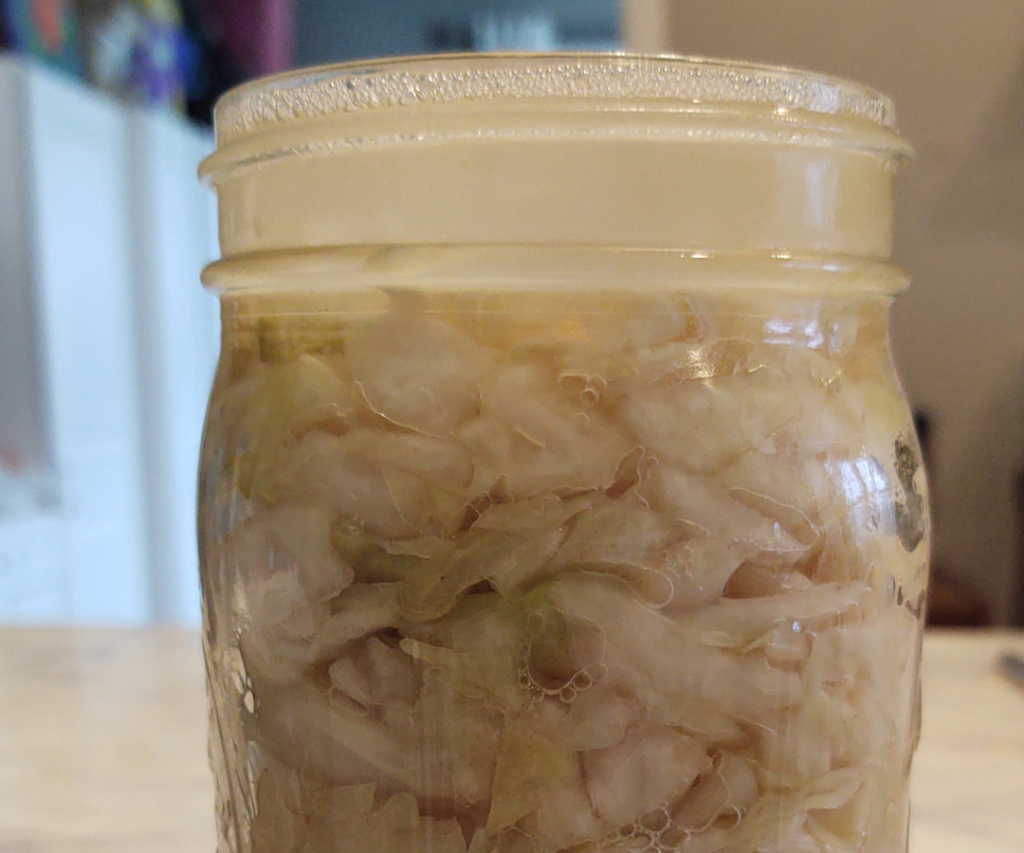
The fermenting cabbage is turning into sauerkraut. As it ferments, it will create bubbles and grow lactobacillus. Lactobacillus is a good bacteria the body needs to support many functions. Be careful to not completely seal the jar while fermenting. It can explode with all of the bubbles and gases being released.
After at least 24 hours, the taste starts to turn slightly spicy and tangy. It should not get super sour or smelly. Once the sauerkraut is the taste preferred, it is time to seal the jar and place it into the refrigerator.
In the first few days, the jar may continue to ferment slightly. Check the jar and release the pressure by opening it and closing it. Or eat some sauerkraut.

Storing
Store sauerkraut in the fridge.
It can last for a few weeks. If the sauerkraut gets slimy, smelly, discolored or fuzzy, it is most likely no longer good and should be disposed of.
Print Recipe
Sauerkraut (lacto fermented)

Homemade lacto fermented cabbage. Lightly spicy and tangy flavor.
Ingredients
- Half Head of Cabbage
- 1 Tablespoon of Salt
Instructions
- Start with a head of cabbage. Any color works fine but regular green cabbage is the go-to. I will usually do half of a head of cabbage at a time, using the other half for a meal.
- Shred up the cabbage and place into a large bowl or pot.
- Sprinkle on 1 tablespoon of salt for each half of a head used. For a full head of cabbage, use 2 tablespoons of salt.
- Let the salt sit on the cabbage for a few hours.
- Every once and a while, mix up the cabbage and work the salt into the leaves. The cabbage will naturally release liquid. This liquid and salt creates the natural brine the cabbage sits in to ferment. Try to keep the cabbage below the liquid to prevent browning and spoiling.
- After at least 2 hours, I will transfer mine to a large mason jar and press down the cabbage as tightly as I can. The liquid naturally covers the cabbage, but if any floats, hold it down with a glass weight or folded up piece of cabbage leaf.
- Cover the cabbage brine mixture with a loose lid and/or tea towel to prevent insects from getting in.
- Allow it to ferment for at least 24 hours to 6 weeks on the counter. The fermenting cabbage is turning into sauerkraut. As it ferments, it will create bubbles and grow lactobacillus. Lactobacillus is a good bacteria the body needs to support many functions. Be careful to not completely seal the jar while fermenting. It can explode with all of the bubbles and gases being released.
- After at least 24 hours, the taste starts to turn slightly spicy and tangy. It should not get super sour or smelly.
- Once the sauerkraut is the taste preferred, it is time to seal the jar and place it into the refrigerator. In the first few days, the jar may continue to ferment slightly. Check the jar and release the pressure by opening it and closing it. Or eat some sauerkraut.
- Store sauerkraut in the fridge. It can last for a few weeks. If the sauerkraut gets slimy, smelly, discolored or fuzzy, it is most likely no longer good and should be disposed of.
Amazon Storefront
Wondering what I use at the homestead? I have created a storefront to show some of the items I buy from Amazon and use. I earn a small commission if you buy from my storefront. CLICK THIS LINK.





One Comment
Pingback: