
Best Companion Herbs for the Garden
Growing herbs in the garden are just as important as growing vegetables. Many herbs not only taste good but have strong smells that repel pests. Herbs can also attract beneficial bugs. Having many different plants in the garden creates bio-diversity. Bio-diversity is when many plants and creatures live together to create harmony and nutrient rich soil. Let's look at the best companion herbs for the garden and how to fit them in.
Basil
Basil is a strong smelling herb that repels many pests such as aphids, asparagus beetles, mites, mosquitos, and tomato hornworms. I plant mine next to asparagus, peppers and tomatoes. However, they are also great next to eggplant, potatoes, sweet potatoes, squash, pumpkins, and zucchinis. Basil is harvested by cutting the top off a few leaves down near a branching of leaves at the main stem. It will then grow out into two places where the leaves once were. Basil is considered a cut and come back herb. If left too long, it will start to grow flowers and seed. Basil will need to be planted every year in zone 5. I like to start my basil and tomato seeds at the same time and transplant them out together.

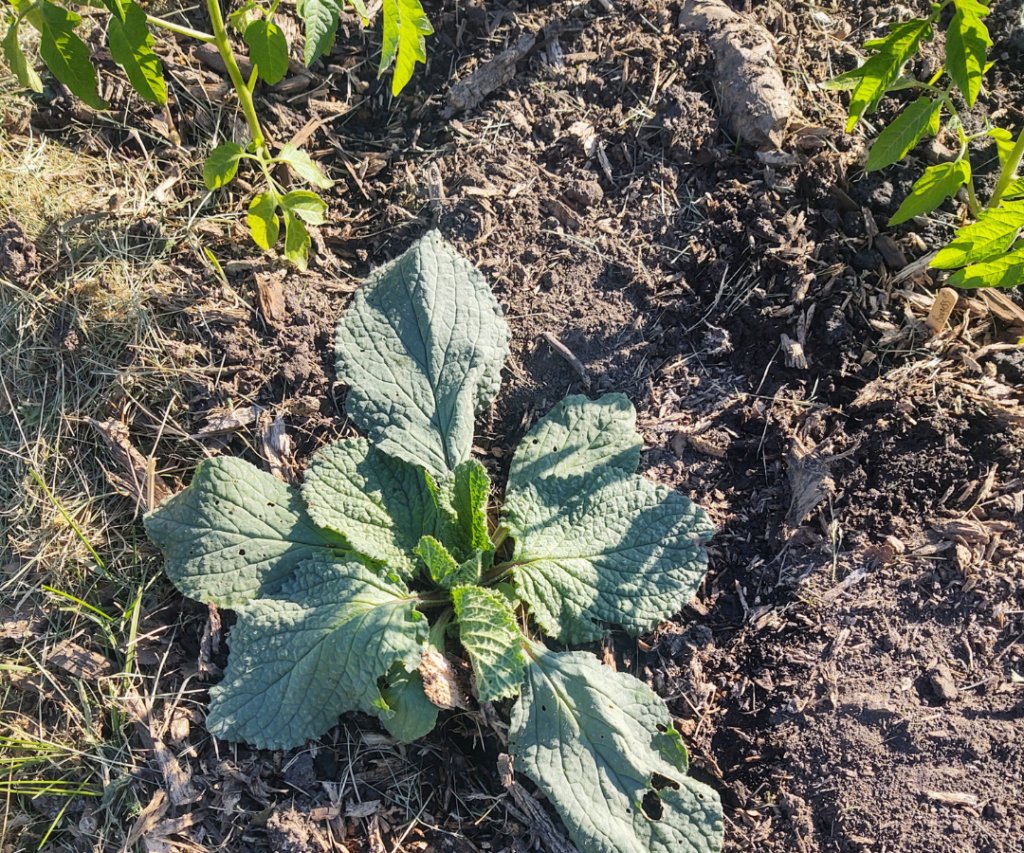
Borage
Borage is a medicinal herb but I mostly use it as a flowering plant to keep away tomato hornworms. The herb is also nice next to strawberries. Borage can easily spread and self seeds each year. I let mine grow throughout the garden and only pull it out when necessary.
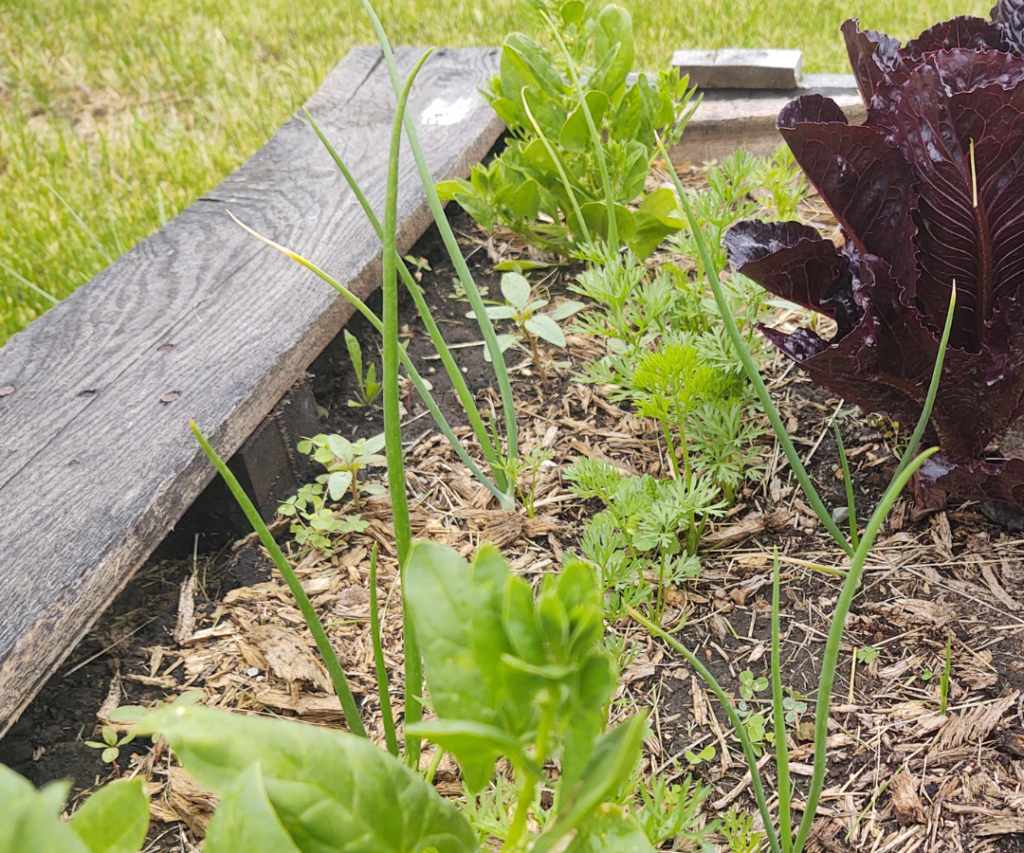
Chives
Chives are part of the onion family, the strong smell often repels aphids and Japanese beetles. I plant chives or onions next to carrots to confuse carrot rust flies. Chives will grow back each year with proper protection and can spread out a few feet. Harvest by cutting off the tops as needed. Planting them in a pot will help reduce the spread but remember to put them in an insulated box or container in the garage or shed for winter.
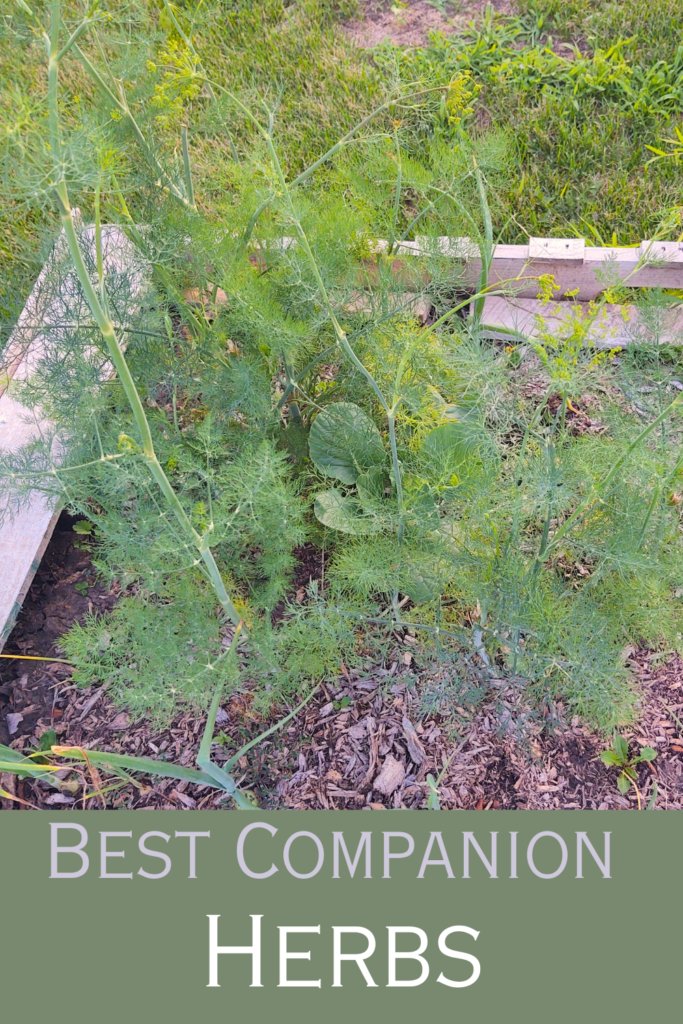
Dill
Dill is my favorite herb to grow everywhere to repel many pests. I plant it by asparagus, beans, broccoli, Brussels sprouts, cabbage, cauliflower, collards, eggplant, greens, kale, potatoes, pumpkins, squashes, strawberries, sweet potatoes, tomatoes, and zucchini. It has a strong smell that repels pests but it also is a beneficial bug hideaway. Lady beetles, bees, wasps, hoverflies and spiders are attracted to dill plants and often eat the pests that feast on your vegetables. I will occasionally find swallowtail caterpillars eating the dill but they are usually not hard to remove. Harvest by cutting the tops off the dill a few leaves down and they will grow back between the stem and leaf branch. Allow some to go to seed and never run out of dill. Dill leaves and the seeds are great for pickling and canning recipes. Some dill will grow back but I usually reseed every year to keep those pests away.

Fennel
Fennel is a root plant that is nice to have around to attract hoverflies, lady beetles, parasitic wasps, and tachinid flies. Plant it next to Brussels sprouts, peppers, Swiss chard, and tomatoes. Fennel tops are the hideaway for these beneficial bugs but plant extra to use in soups and salads. Fennel can go to seed and be replanted again. Watch for caterpillars, they also love this herb.

Garlic
Garlic is amazing at repelling many things due to the strong smell. I plant many garlic all over to preserve but also to repel rodents and Japanese beetles. I also plant it specifically next to carrots and beets to confuse pests. Garlic grows as a bulb. The bulbs are then collected for storage but they are easily replanted each year to never run out of it.

Mint/ Catnip
Mint and catnip are in the same family. I will use both, peppermint and spearmint for teas and catnip for my cats. The strong smells will deter aphids, asparagus beetles and squash bugs. Place mint around beets, squashes and pumpkins. Mint also attracts bees, parasitic wasps, and cats. Plant any type of mint in containers to prevent spreading if necessary. Mint often returns on its own and loves getting trimmed back while collecting leaves for herbal teas.

Parsley
Parsley is a lovely herb for cooking and it attracts benefices like parasitic wasps and bees when flowering. It will deter asparagus beetles, so plant it next to asparagus, potatoes and fall broccoli plants. Allow it to seed and it may come back next year. Keep an eye out for swallowtail caterpillars, they might enjoy some too.

Amazon Storefront
Wondering what I use at the homestead? I have created a storefront to show some of the items I buy from Amazon and use. I earn a small commission if you buy from my storefront. CLICK THIS LINK.

