
Best Companion Garden Flowers
It may sound odd to plants flowers with your herbs and vegetables but they are a must in my garden. Having many different plants in the garden creates bio-diversity. Bio-diversity is necessary for a healthy garden. Flowers can deter pests and shelter beneficial bugs. Strong smelling flowers can also confuse pests that are looking for a particular plant to feed on. Flowers are also so beautiful and pollinators love when I can fit them in. Now lets see what are the best companion garden flowers are my favorite.
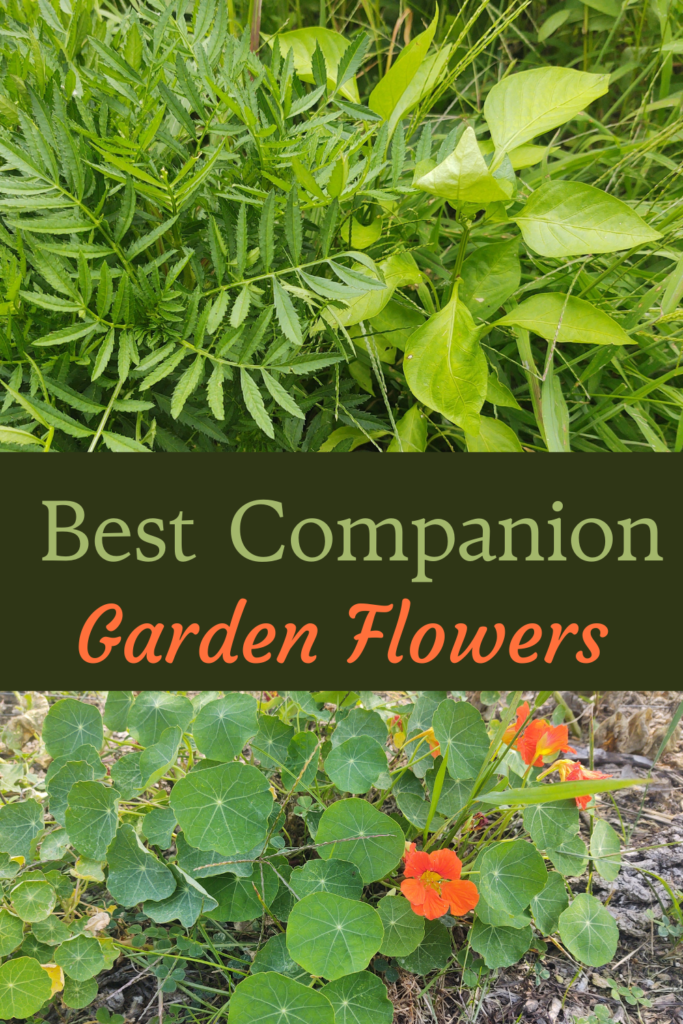
Bachelors Buttons
Bachelor Buttons are great early flowers for pollinators. They are small flowers that come in many colors. Cut fresh flowers to prolong the blooming. They will often self seed for the following year. Starting bachelor button seeds are easy and a great starter plant for kids.

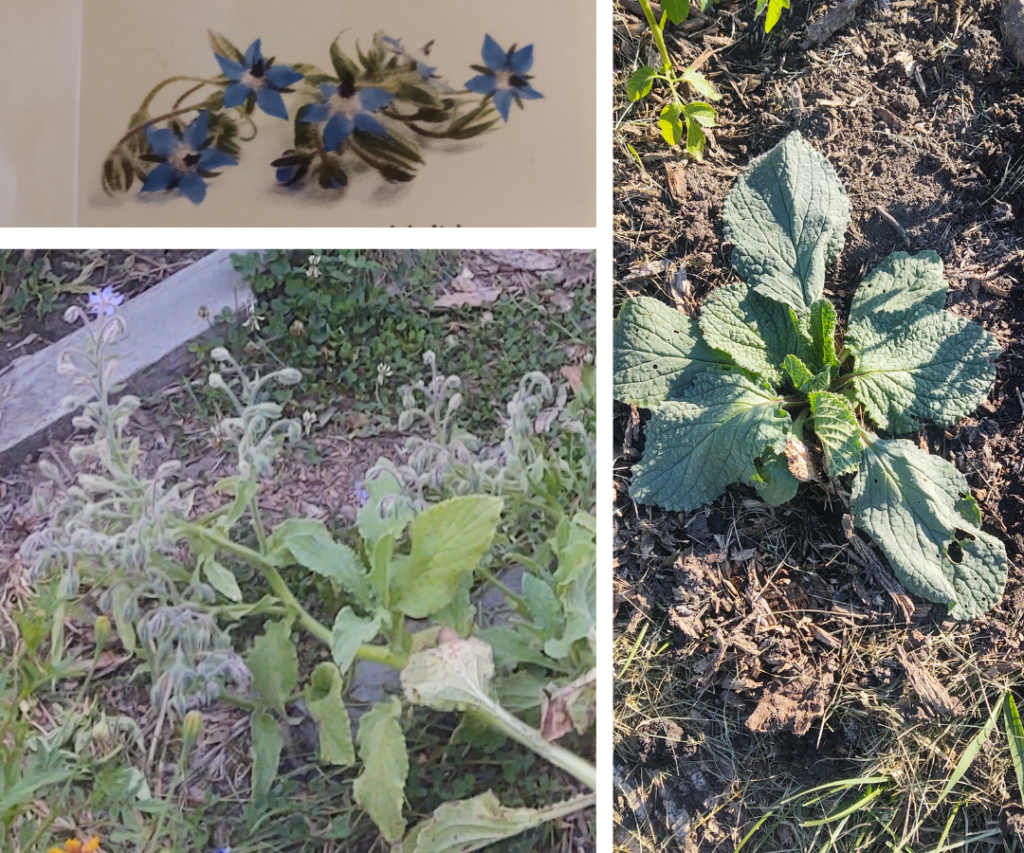
Borage
Borage are great for strawberries and tomatoes, keeping away the tomato hornworms. It is an edible medicinal herb with tiny blue flowers that attract bees and shelter bugs like the praying mantis. They like warm soil, will often self seed for the following year and are very easy to grow.
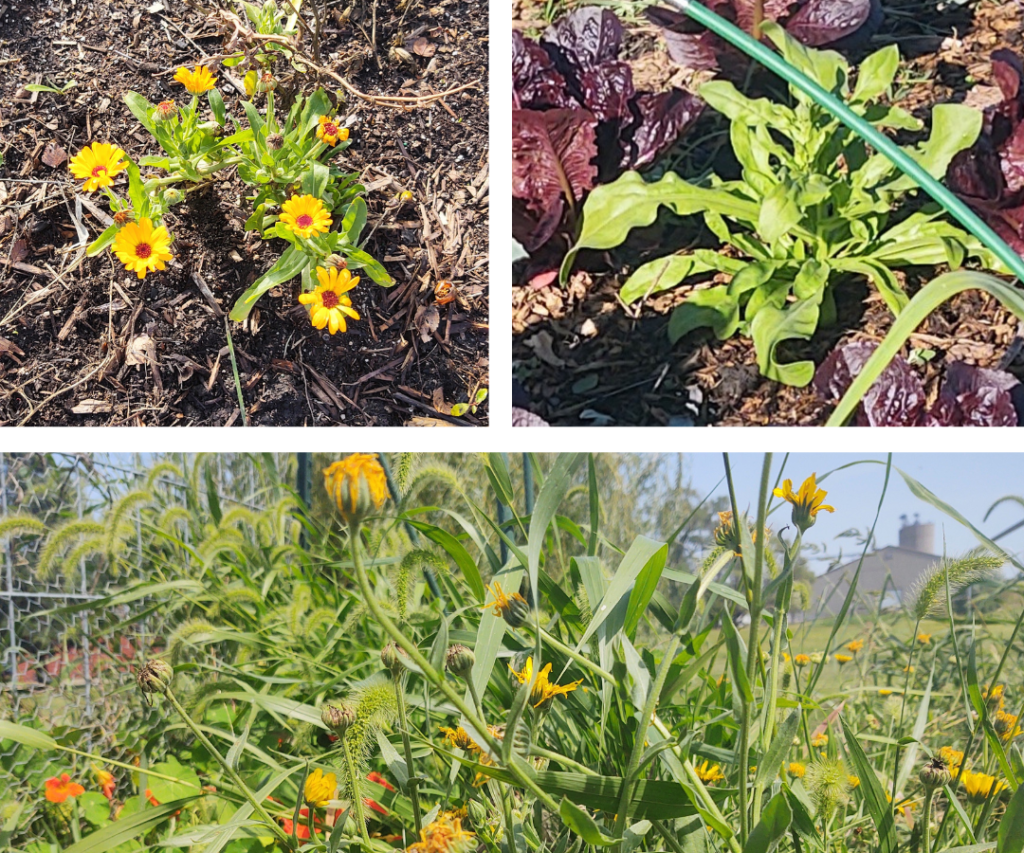
Calendula
Calendula are great for spring and fall crops such as asparagus, cabbage, carrots, collards, Brussels sprouts, kale, peas and Swiss chard by attracting many beneficial insects. They are one of the first to bloom and resemble marigolds with bright reds, oranges and golden yellow flowers. The flowers can also be used for medicinal purposes. Calendulas often reseed themselves each year and collecting the seeds are easy.
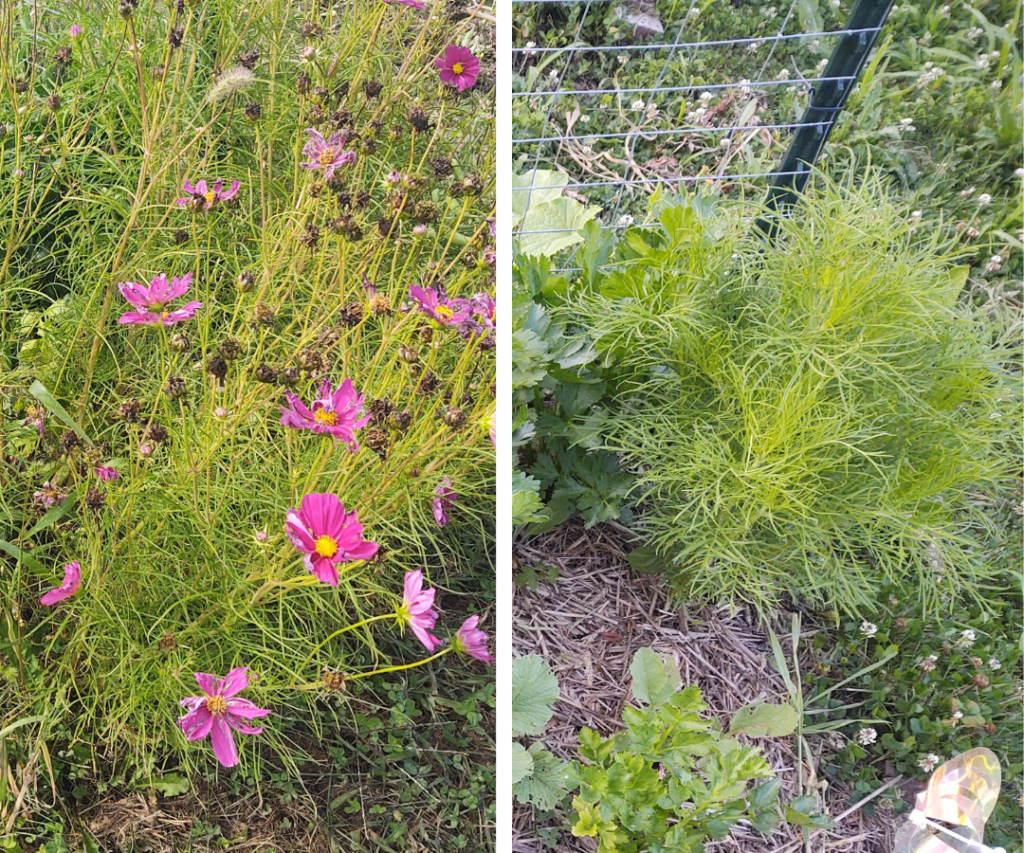
Cosmos
Cosmos are great for summer time plants such as celery, eggplant, leafy greens, peppers and tomatoes. They attract parasitic wasps, hoverflies, tachinid flies and bees. They come in many colors with yellow centers, often great for cutting flower bouquets. Cosmos will often reseed each year and collecting seeds is easy to do.
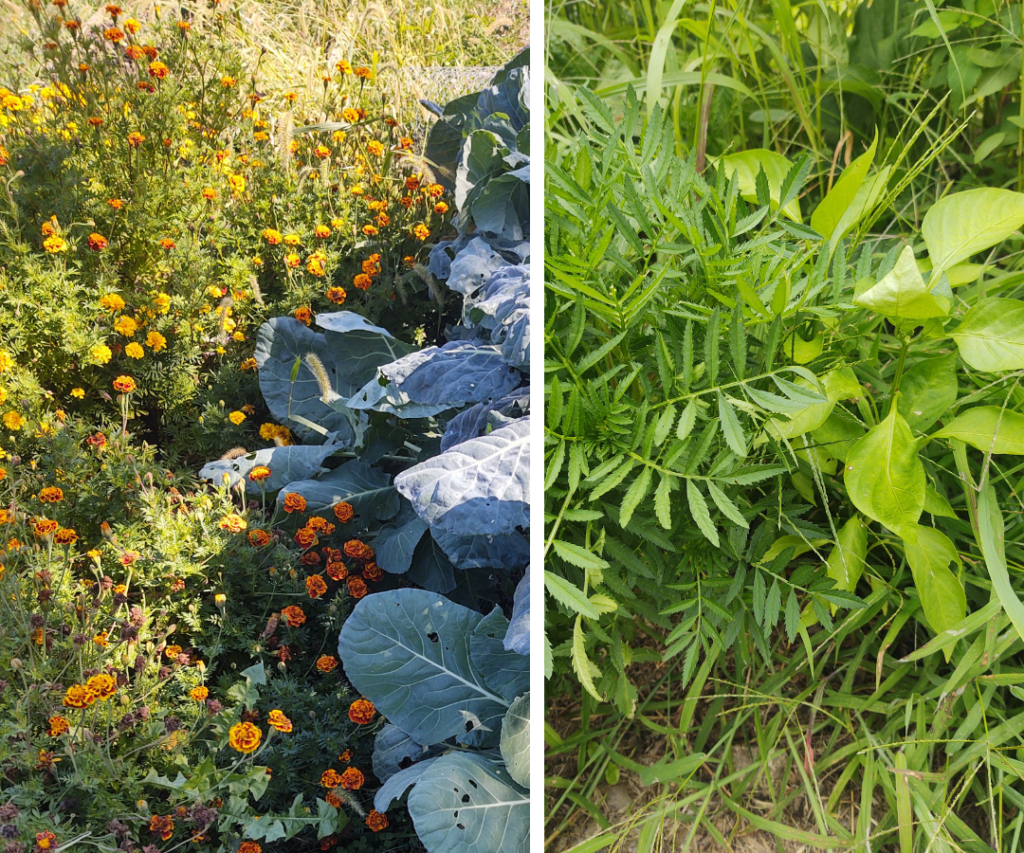
Marigolds
Marigolds are amazing summertime and fall plants. Plant them next to broccoli, cabbages, collards, eggplant, kale, melons, peas, peppers, potatoes, pumpkins, radish, summer squash, winter squash, and zucchini. They attract hover flies and parasitic wasps with their bright yellow and orange flowers. The strong scent of marigolds seem to repel bean beetles, flea beetles, root-knot nematodes, and root lesion nematodes. Marigolds are great bouquets and will often reseed each year.
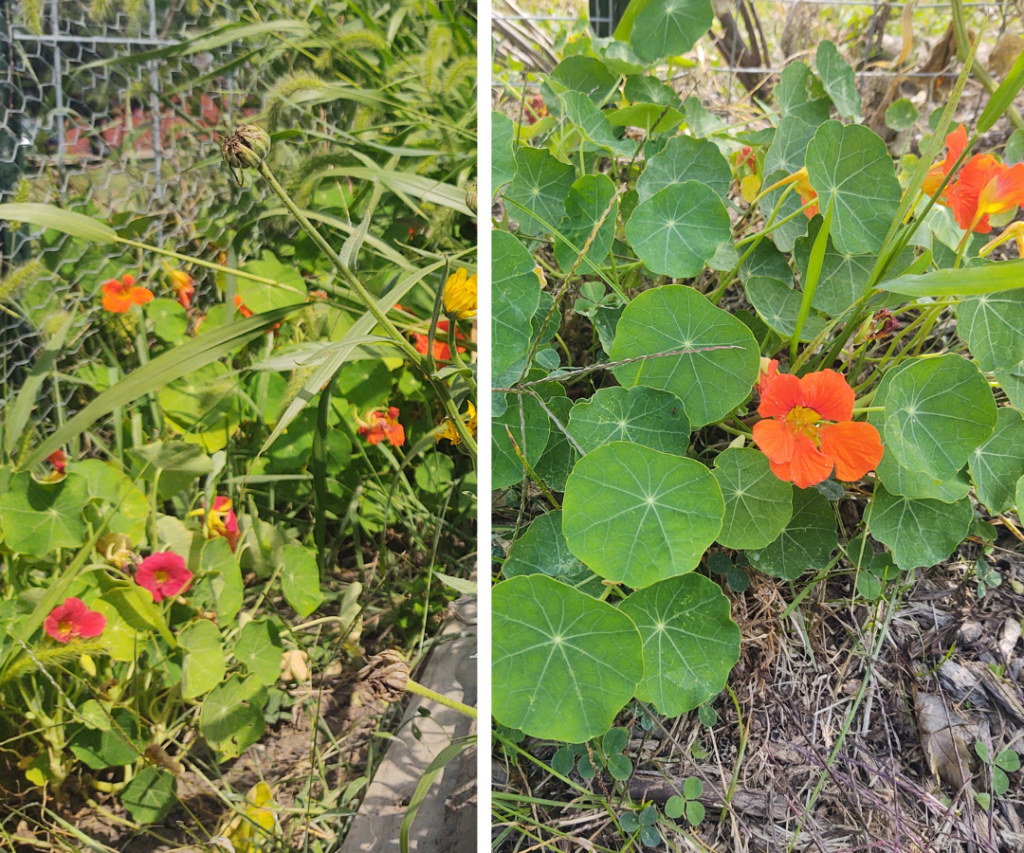
Nasturtiums
Nasturtiums are also very amazing for summertime and fall plants. Plant them next to corn, cucumbers, melons, pumpkins, radishes, summer squash, winter squash and zucchini. The low growing plant shelters ground beetles and spiders to protect against slugs. While the bright flowering plant repels aphids, Colorado potato beetles, cucumber beetles, Mexican bean beetles, and squash bugs, Nasturtiums are long vining plants with orange, yellow, and sometimes purple to white flowers. They will need to be planted each year in zone 5 but collecting the seeds before the first frost is not hard to do.
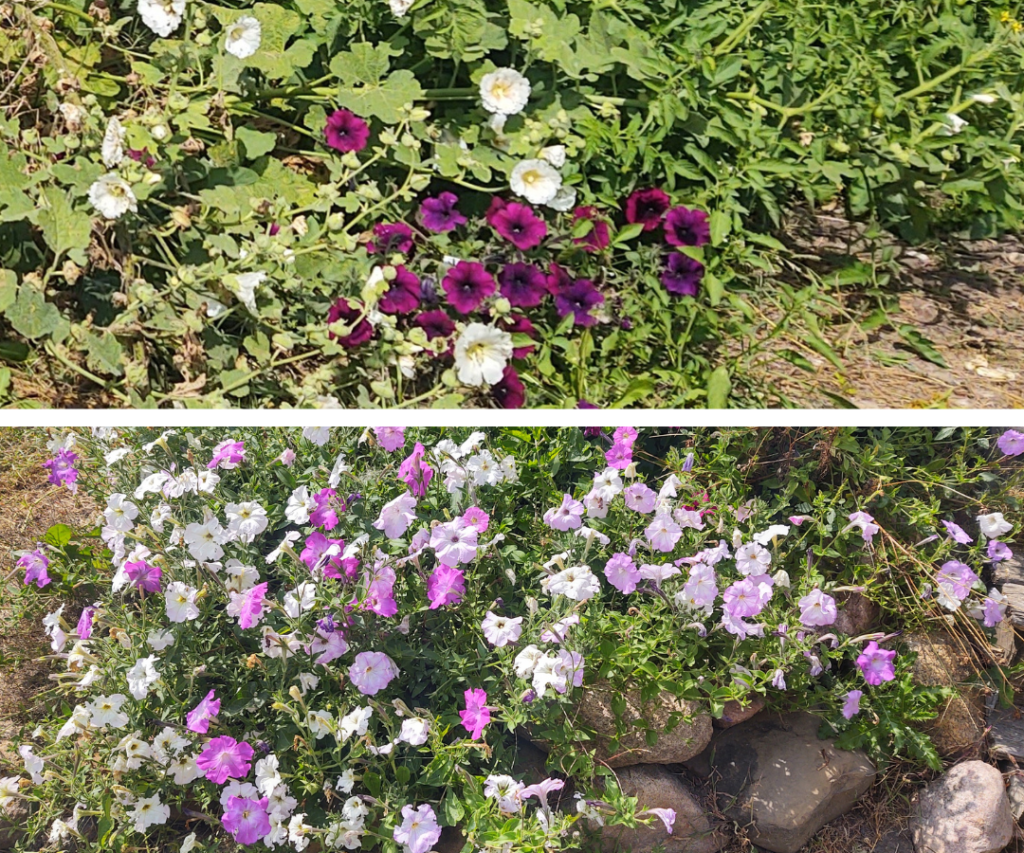
Petunias
Petunias are very beautiful flowering plants to have in the garden. I plant them among peas, garlic, and onions. They will spread out and cover the ground to act like a natural living mulch, which is cost effective. Petunias shelter ground beetles and spiders needed to protect against slugs. They come in almost every color and bloom all summer long. Petunias will need to be planted each year in zone 5.
Sunflowers
Sunflowers are a nice summertime and fall plant. Plant short varieties near lettuce, peppers, pumpkins, summer and winter squashes, zucchini, and tomatoes. While taller varieties can be used as a living pole for beans and peas. Sunflowers attract assassin bugs, hoverflies, lady beetles, lacewings, parasitic wasps, spined soldier bugs, spider, tachinid flies and bees. Sunflowers come in many colors and sizes. I will save seeds to plant next year or even enjoy them to eat. Whatever is left, I leave for the birds.

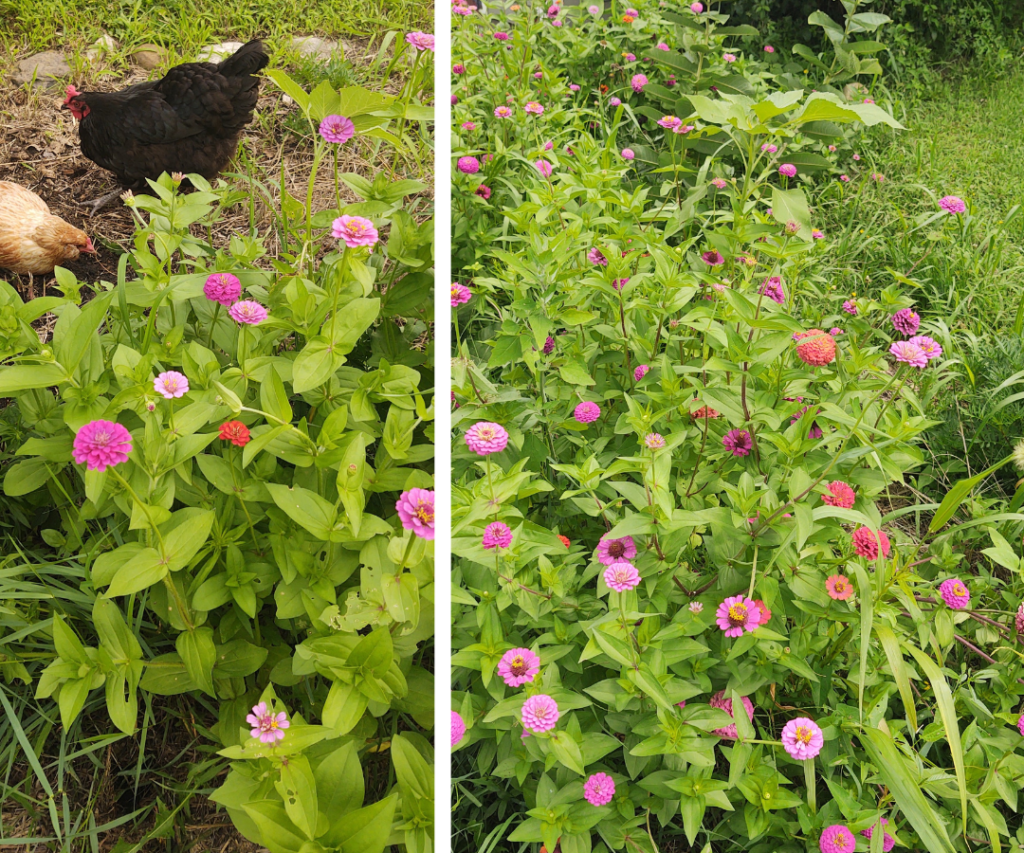
Zinnias
Zinnias are great for summer and fall plants such as beans, broccoli, Brussels sprouts, cabbages, cauliflower, and celery. They attract lady beetles, ground beetles, parasitic wasps, parasitic flies, bees and spiders. Zinnias come in many colors and sizes. I plant mine in-between vegetables to prevent slugs. I find that mine will sometimes reseed themselves but I also collect seeds for the following year to add more throughout the garden.
Amazon Storefront
Wondering what I use at the homestead? I have created a storefront to show some of the items I buy from Amazon and use. I earn a small commission if you buy from my storefront. CLICK THIS LINK.


2 Comments
Rebecca Goodsell
I love reading about the new things you put on here!!!! and I love you.
hhawkinson
Thank you! Love you too!