Growing Lettuce
Growing lettuce is an easy vegetable to start. I love growing fresh lettuce all year. A lot of varieties grow in medium containers and do not get too big for indoor use. While, in the summer, I grow bigger varieties like head lettuces that harvest 12 plus inches across. Learn how I start lettuce from seed and save you money by growing your own lettuce.

When to Grow Lettuce
Lettuce is a cool season crop. It does best in the spring or fall. However, some lettuce will grow in the summer. Look for heat tolerant varieties such as Bibb and Butterhead. Start seeds about 4 weeks before transplanting outdoors.
Where to Grow Lettuce
Lettuce like full sun or at least 6 hours of sun per day. The more sun in spring and fall is great. While in the heat of the summer, placing lettuce in an area where the hottest part of the day is shaded helps the lettuce from bolting (growing seeds).
Lettuce like moist but not soggy soil. Watering at least 2 inches per week.
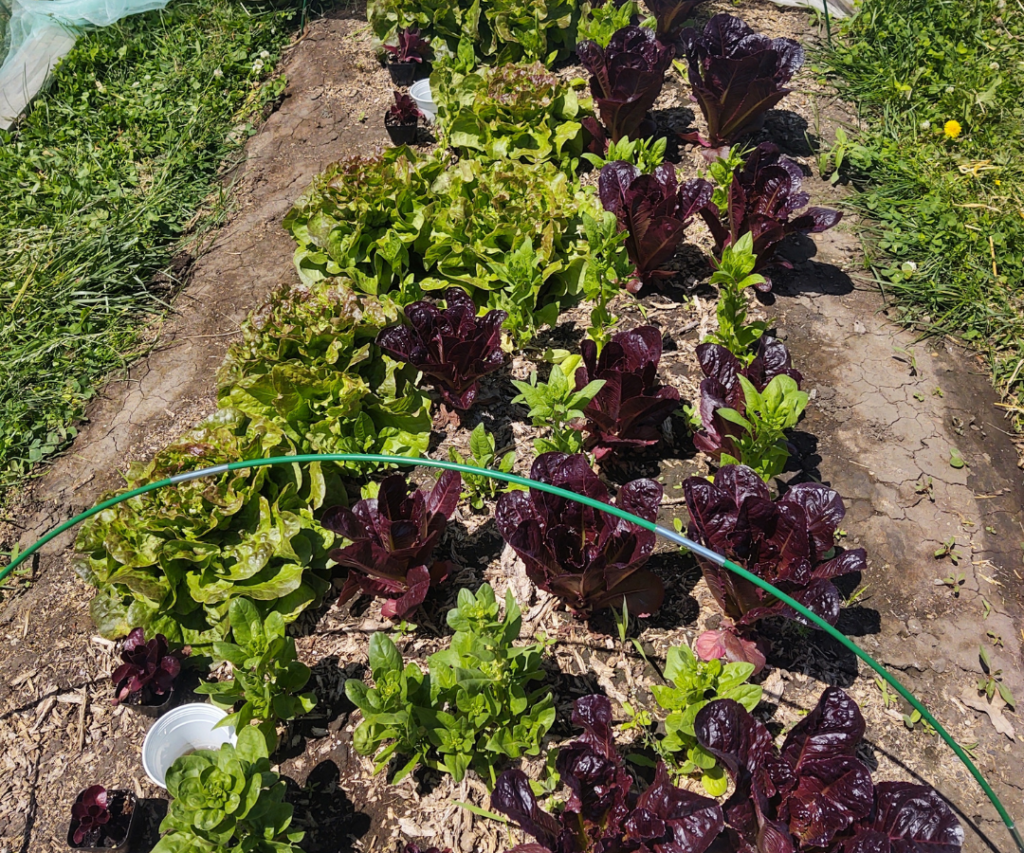
Leaf varieties of lettuce fits perfectly in-between many other garden plants such as tomatoes, cucumbers, peppers, and other head lettuces. Really anywhere you have an empty space. Planting onions, garlic and parsley near lettuce helps control pests. I like to have a whole garden bed full of different salad greens in the spring and fall.
Starting Lettuce from Seeds
Lettuce seeds do just fine started directly into the garden soil, in a container or under a grow light. I like starting mine under a grow light throughout the year to have indoor salad plants. I also like starting them indoors to transplant out into the garden bed because I can control how many plants I have out there during different times of the year. Some people like to broadcast the seeds on the ground and then thin out the plants later when it is too crowded.
Soil Mix
I start by making a batch of homemade seed starter mix. My mix is 7 parts coco coir, 1 part perlite, and 1 part compost or worm castings. I heavily wet the mix before using. Lettuce uses very little nutrients but having a good compost will maintain most varieties until harvest.
Containers
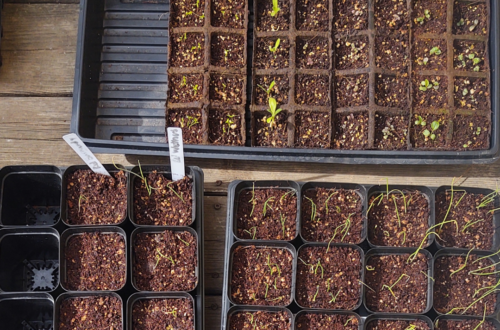
Then I gather small containers with a bottom tray. I will fill the container as lightly as possible by slightly tapping the container down to level the soil mix. Fill all the containers needed and place then onto the tray. Next, sprinkle on 6-10 seeds per 1.5 by 1.5 inch container or 2-3 per single cell containers. I like using small shallow containers to start the seedlings in so the can easily find the water at the bottom in the trays.
Water/ Light
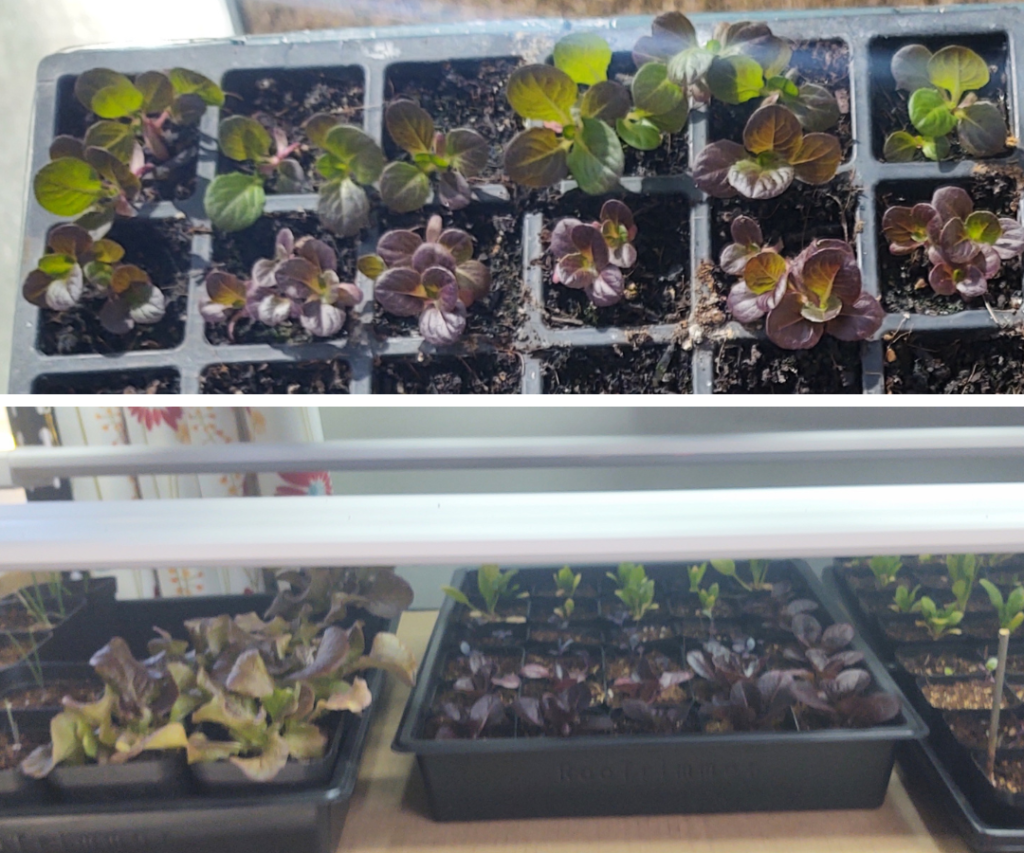
After sprinkling on seeds, add about 1/4 inch of the soil mix to the top of the seeds. Lightly press down the soil to make contact with the seeds and level out the tops. Mist the tops with water and cover with a plastic wrap. Place trays under a grown light about 2-3 inches away until sprouted. Misting the top every few days helps keep the seeds moist and in the right condition to sprout. Once sprouted, remove the plastic wrap to reuse on another batch of seedlings. Start to bottom water the seedlings by filling up the trays below the containers.
Once the seedling are growing an inch or two up, move the grow lights higher. The seedlings can be transplanted into larger containers once they have 3 true leaves.
Transplanting Lettuce into a Container
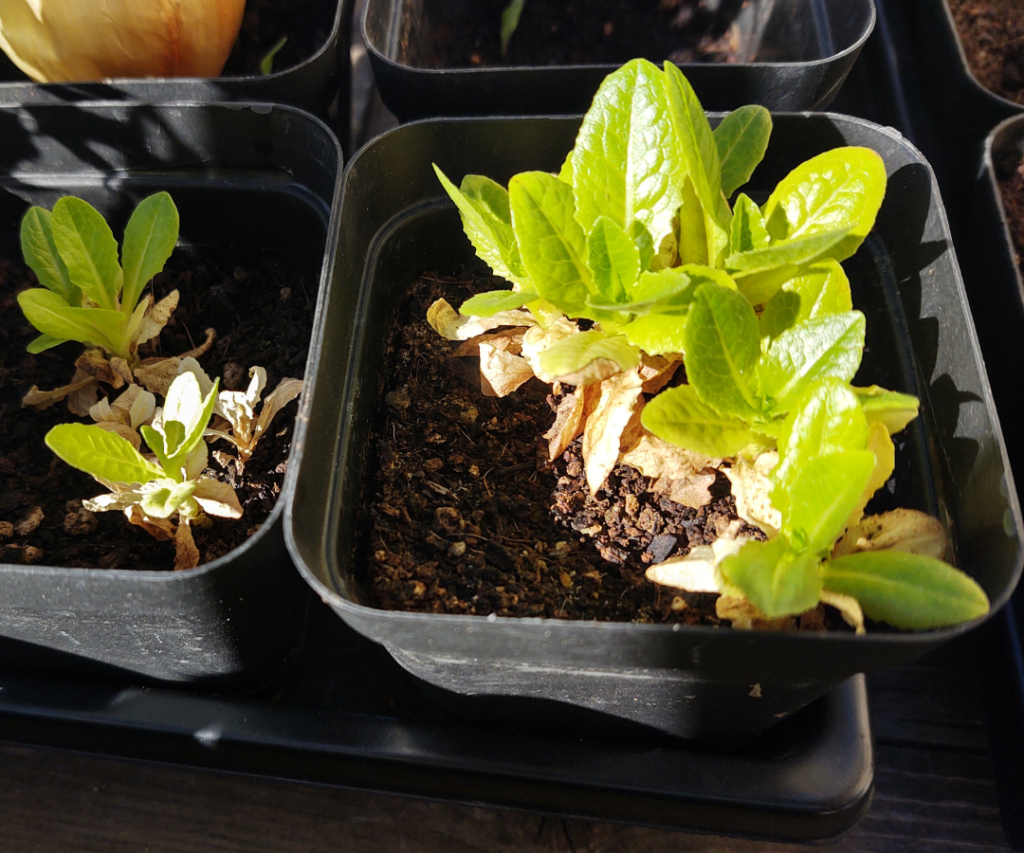
Transplant lettuce to stimulate growth and more room to spread out. I like to move 1 lettuce plant into it's own 3-4 inch container. Count how many plants you have and prepare larger containers with the soil mix by filling them up 1/2 inch from the top. Poke a long deep hole down the middle of each pot.
Now separate the lettuce by turning the small container full of lettuce seedlings into your hand. Holding the base of a lettuce plant, shake and wiggle it's roots away from the other plants.
Place the seedling into the hole of a pot. Make sure the roots go down the length of the container. Carefully fill in the soil mix around the plant. Soil should only be filled in as close to the plant base as possible. Lightly press the soil to level. Continue with all of the plants.
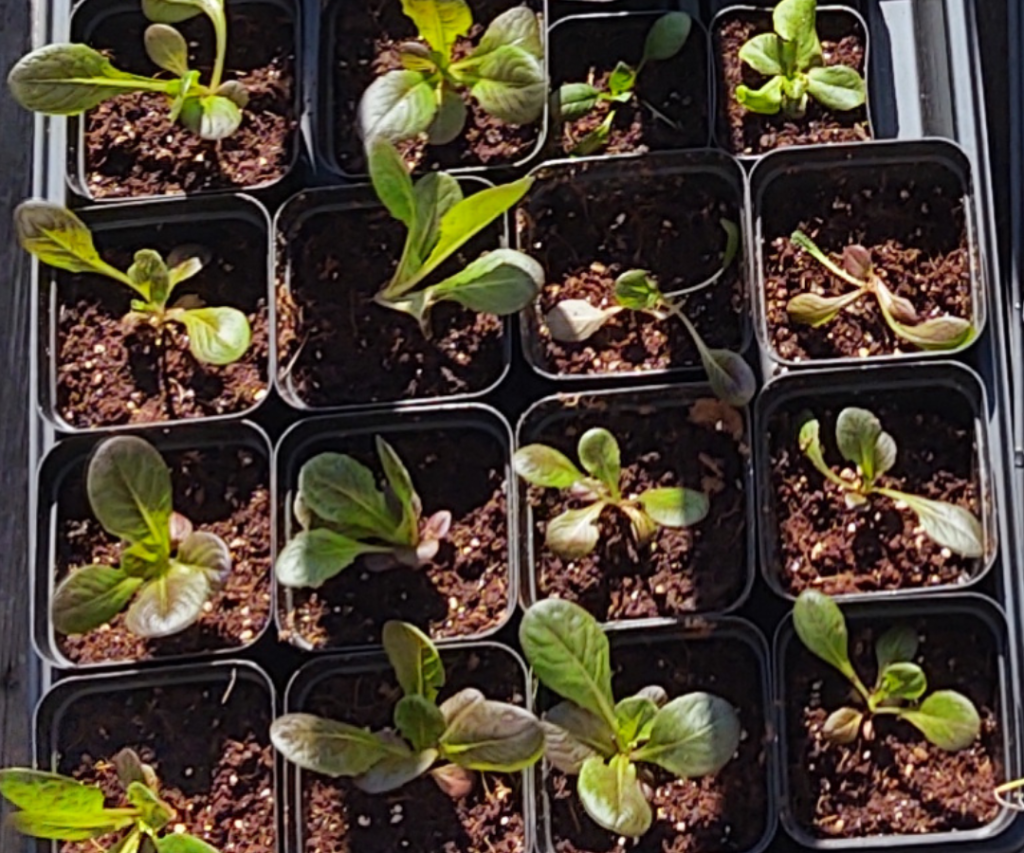
Place plants into a tray to bottom water. I will have about an inch of water already sitting in the tray as I continue to transplant the lettuce into the new containers. That way they can have a drink as soon as possible, sometimes it is stressful for a plant to be transplanted.
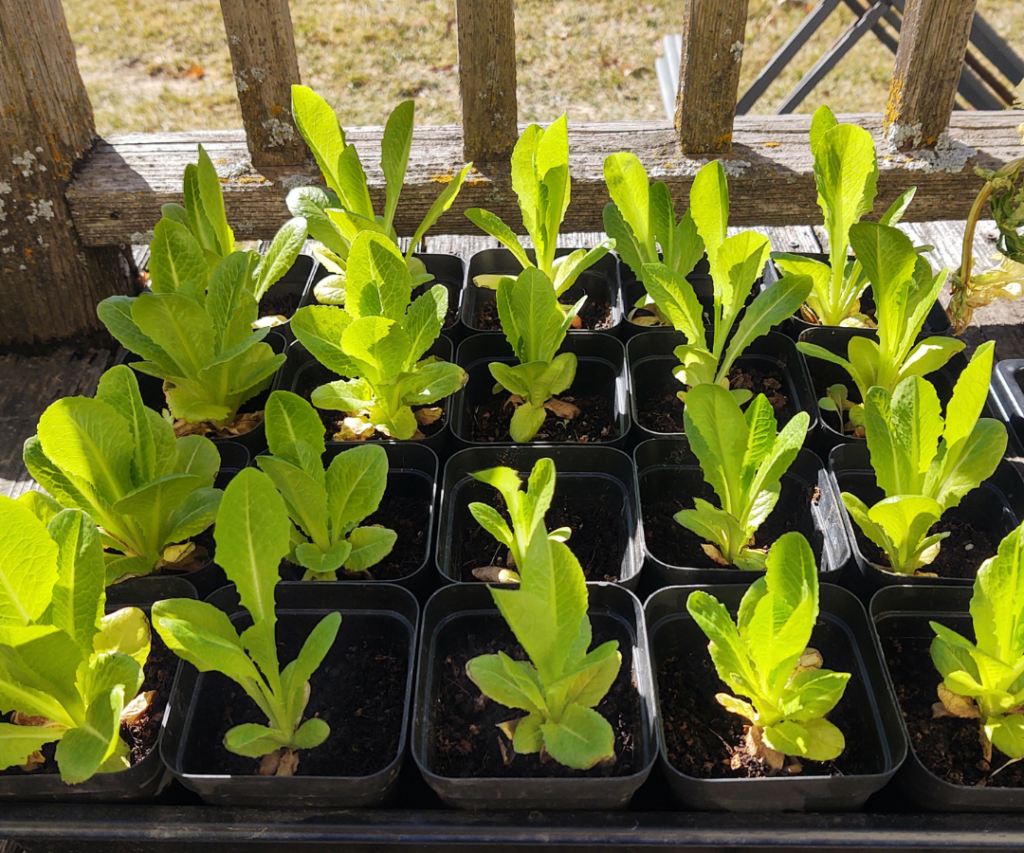
Transplanting Lettuce into the Ground or Final Container
As the lettuce grows, it will need a bigger place to live. Find a place in the garden between tall shaded plants in the summer or make a salad garden in the spring or fall. Sometimes it is nice to have a large 12 inch or bigger pot on the porch to grow lettuce in. Especially if you are limited yard space.
For head lettuces, stick to just one plant in the pot. For leafy greens, up to 3 plants in the pot. When the lettuce is looking bigger and the weather is past the freezing conditions, go ahead and transplant. If you are lucky enough to have a cold frame, plant lettuce almost anytime. I use row covers to protect from the elements. I use this row cover kit from Amazon.
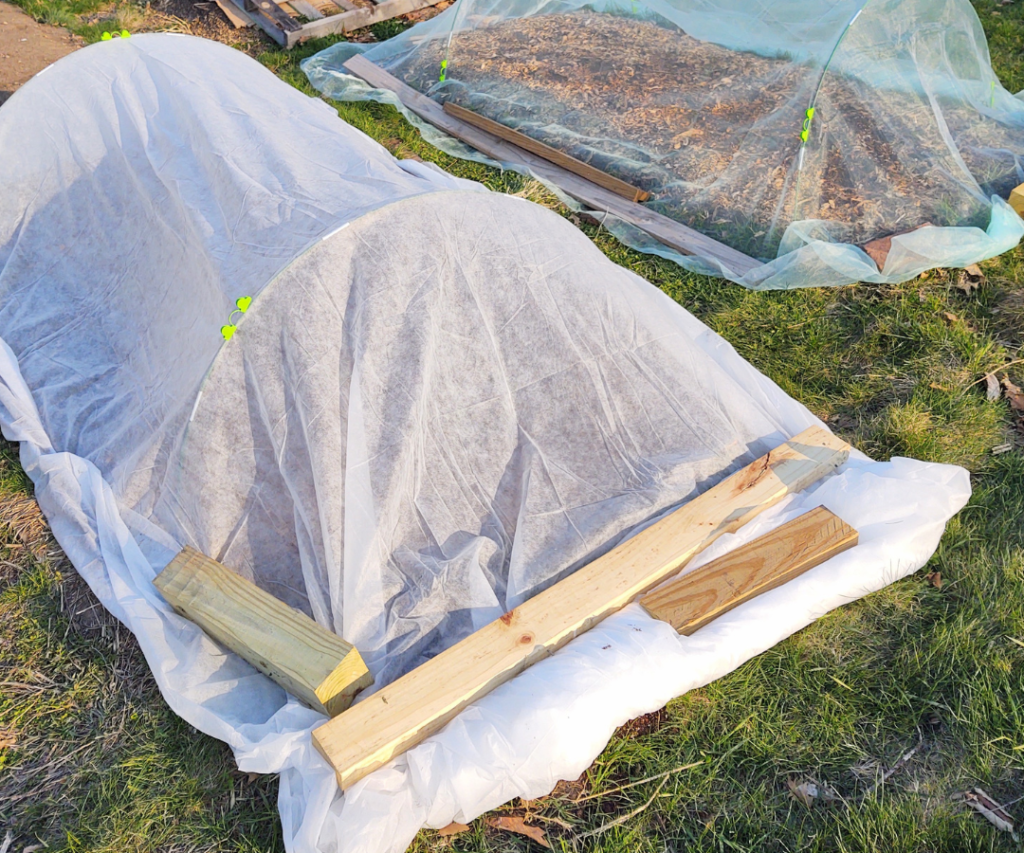
Once you find a place for the lettuce, make a hole as deep as the container it is in and slightly wider. Tip the plant out of the container. Slightly loosen up the plants roots. Place the lettuce plant into the soil and fill back in the soil to the base of the lettuce.
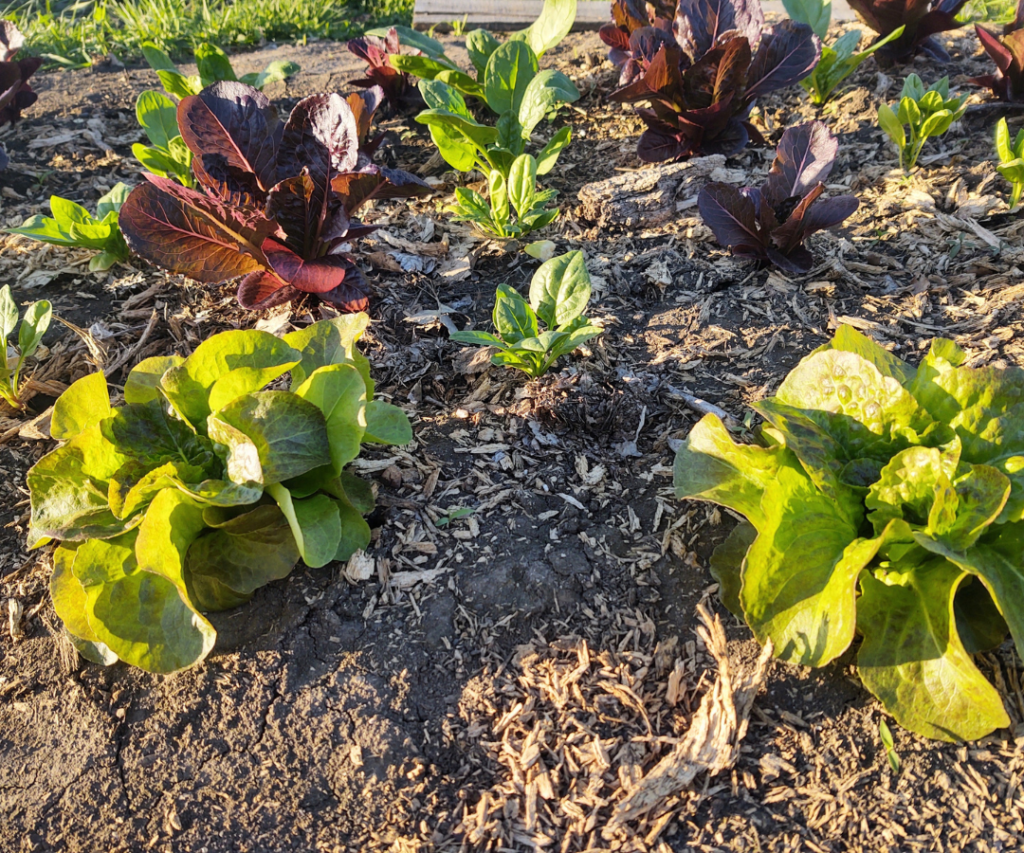
Head lettuce should be about 12 inches apart and leafy ones can be 6-10 inches apart.
Water in deeply. Now it shouldn't be much longer until you have lettuce to harvest.
Harvesting Lettuce
Harvesting lettuce is probably the best part of growing lettuce. There are two ways to harvest lettuce.

First, cut the whole lettuce off from the base of the plant. Head lettuces, like iceberg, can only truly be done this way. It does not grow back. Although, all lettuces can be harvested this way.
Second, cut a few leaves off the base of the plant at a time. This is best for leaf types like romaine. Cutting a few leaves at a time allows the lettuce to keep growing and producing.
When the weather starts getting either too hot in summer or too cold in the fall, the lettuce will want to make seeds and become bitter. Make sure to cut the whole plant off before it goes to seed stage.
For more information on seed starting, try my Seed Starting Guide page. It will explain the different lights, soil mix, container and so much more.