Making apple cider vinegar
One of my favorite vinegars to use around the homestead is apple cider vinegar. Vinegars have been around for thousands of years. It is a natural anti-bacterial and anti-fungal remedy used in many homeopathic recipes. I like adding apple cider vinegar to foods, drinks, and body care.
All you need to make apple cider vinegar is apple cider and a mother of vinegar. If you don't have the mother, you can still make vinegar but it can take months to establish a mother of vinegar. Mother of vinegar is made up of cellulose and bacteria. The mother eats the alcohol in fermenting fruit and turns it to acetic acid. The acetic acid is the vinegar.
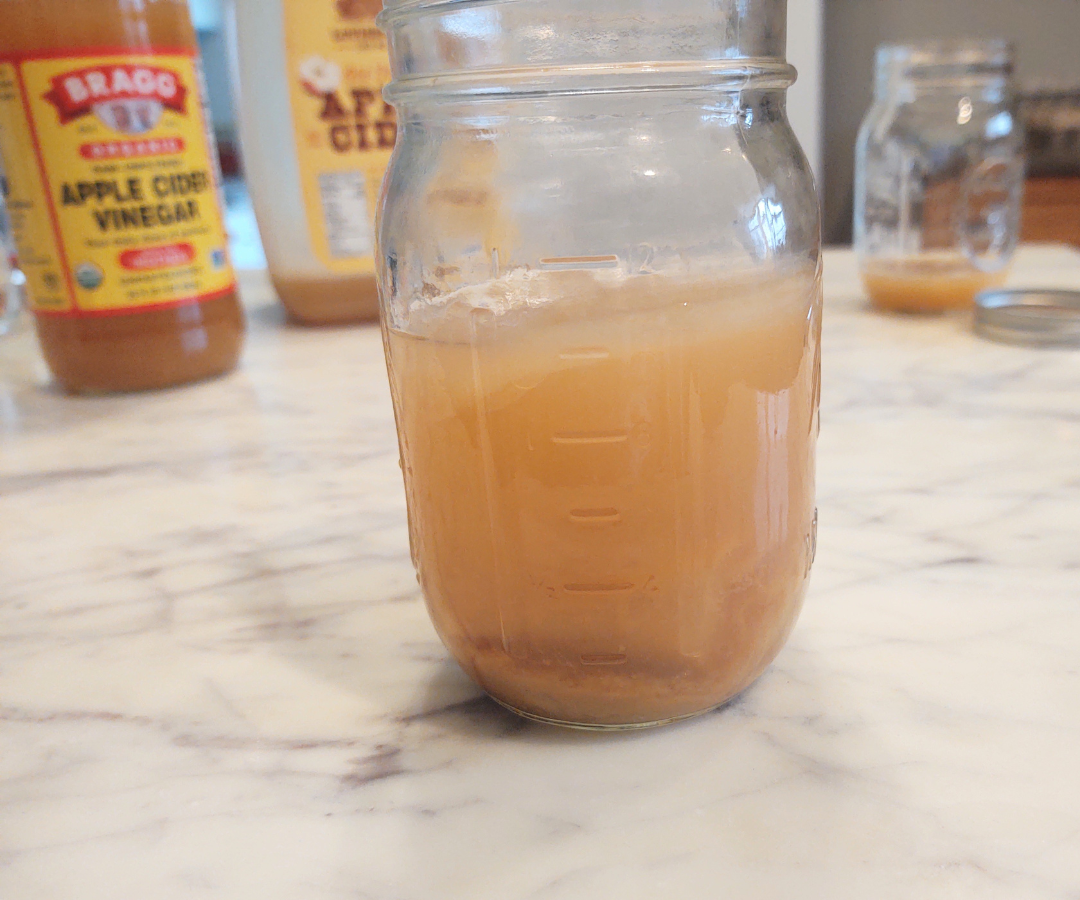
You can make the mother two ways. One is by fermenting pure unfiltered, unpasteurized apple cider for several months until the mother forms on top of the cider. Which in turns makes the vinegar as well. However, this process can be risky and can instead create mold spores in the apple cider. The other way to make the mother is by taking wine, putting it into a wide mouth container, and letting that sit out with a cotton cloth over the opening for several months until the mother forms. This will then make you some wine vinegar.
How to make apple cider vinegar
First you need organic, raw apple cider. It can be pasteurized but doesn't have to be. I like to find some at the farmers market or use freshly made from buying apples.
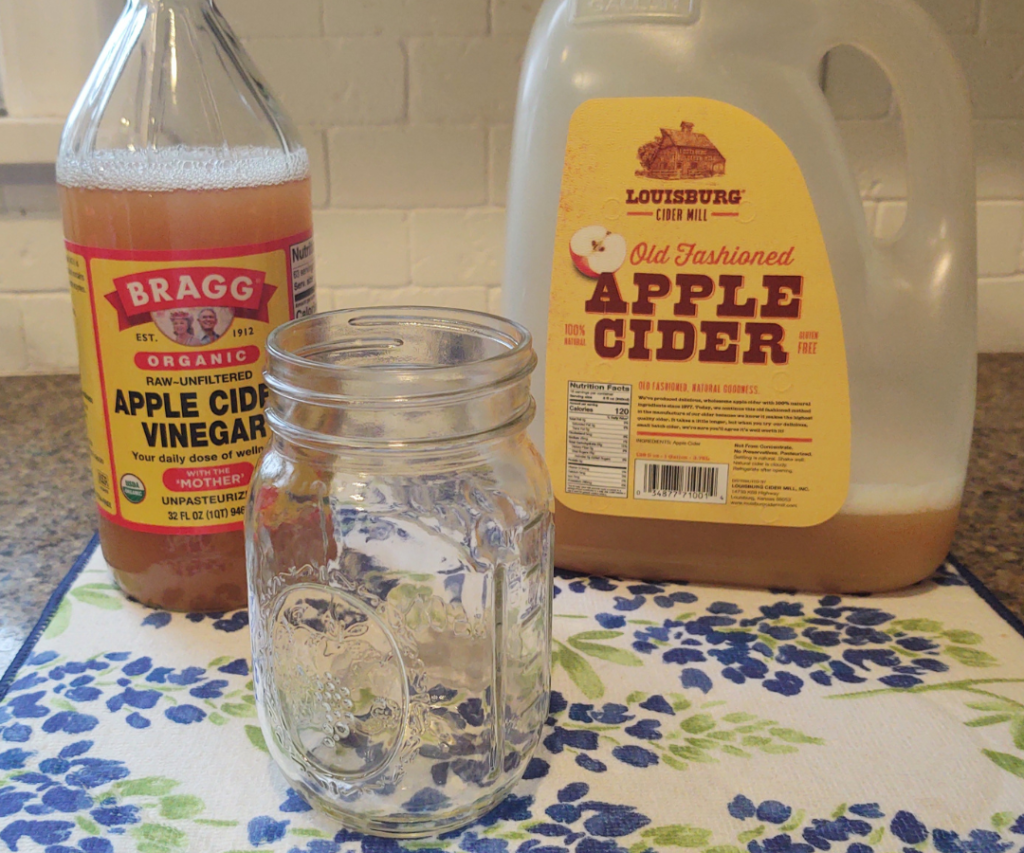
Next item needed is apple cider vinegar with the mother. You can buy it online or from someone you know that can spare some to use. Braggs apple cider vinegar from the store has the mother in it as well. It is what I use when I want more vinegar the faster way and don't have any vinegars on the shelf. Then once the original vinegar is made, I will always have a supply of mother to remake other vinegars.
Take the apple cider and pour it into a sterilized glass container. For every cup of cider, I use about 2 tablespoons of the mother of vinegar to inoculate it. If making 4 cups of vinegar, use 8 tablespoons of the mother of vinegar.
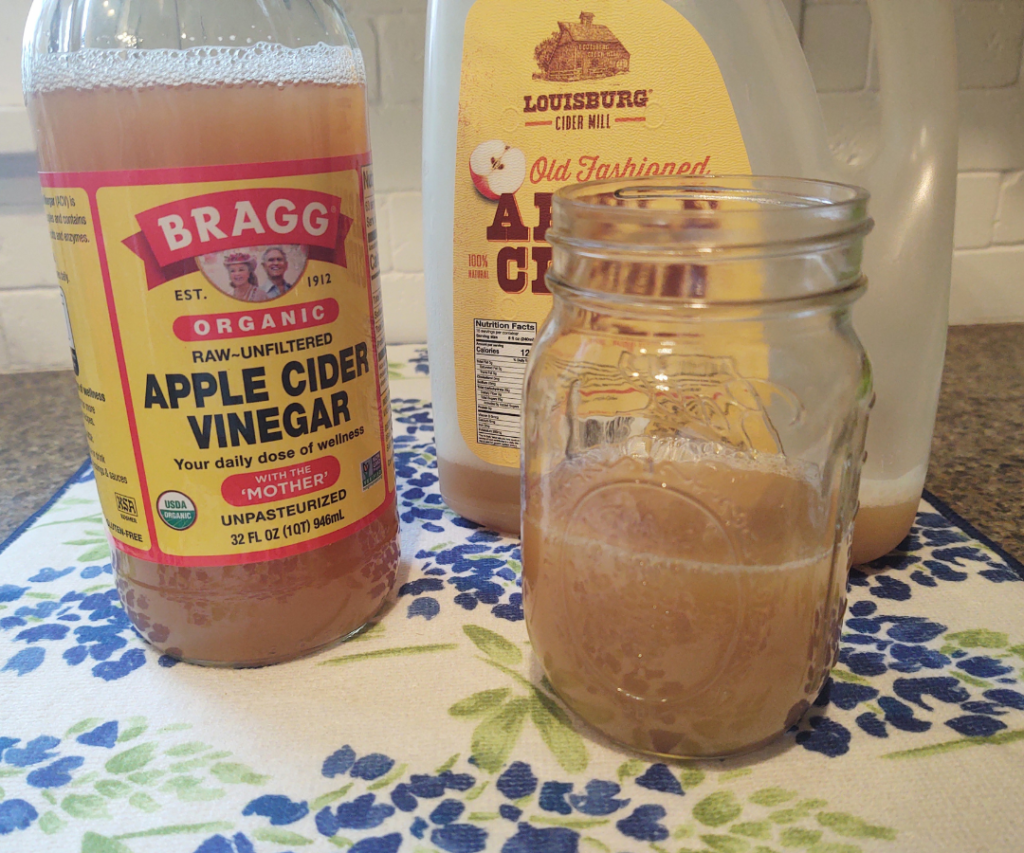
Cover the jar with a cheese cloth that is folded enough to not let fruit flies in or a wash cloth or any cotton fabric that is breathable. Air flow is needed to allow the vinegar to breath and ferment. Secure with a rubber band or tie. Leave on shelf free from light.
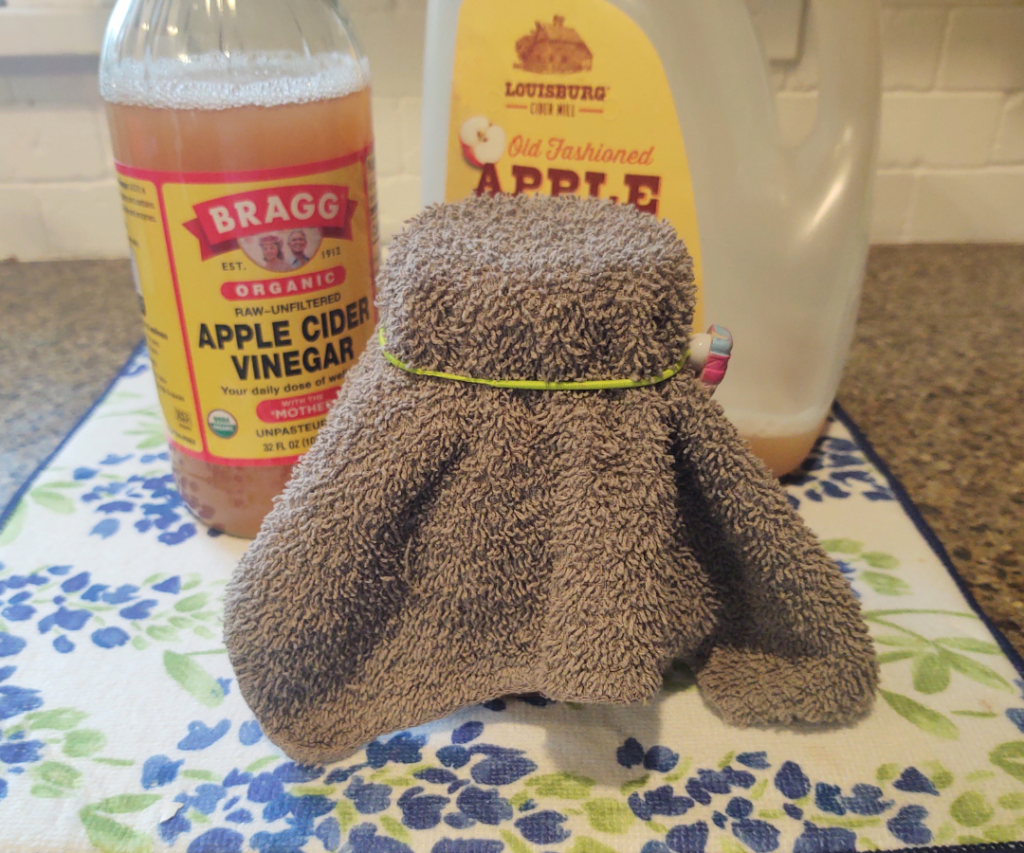
Check cider every few days to make sure no mold or fungus is growing. If black or colored spots appear, toss out and try again. Make sure container is completely sterilized.
Taste the cider. It will start to taste more like a cider and vinegar mix, then more vinegary as time goes on. Be careful, if left for too long or forgotten, the vinegar will turn back into water.
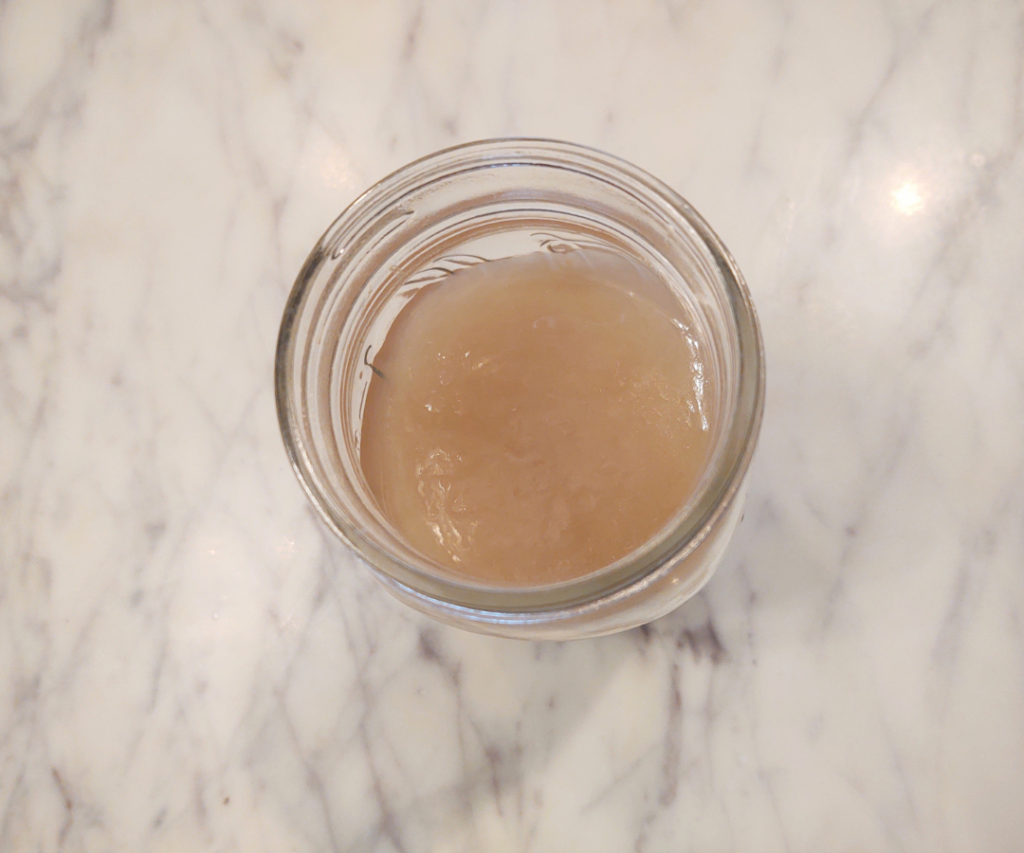
Once the apple cider vinegar is tasting to your preference, strain the liquid and bottle it up into a skinny neck bottle keeping it air-tight. This stops the vinegar process and the mother from turning the vinegar to water.
If you want to keep the mother alive and vinegar going, simply add more apple cider to the jar and let the mother feed off the alcohol.