The Deception of Flour
Grains are one of the most nutritious foods on earth. Grains are made from grasses that hold all of the nutrients inside of the seed, which also make up the plants fruit. Our body needs 44 essential nutrients absorbed from food. Wheat contains 40 of these nutrients that we need to function properly. Vitamin A, B12, and C plus the mineral iodine are the missing nutrients from wheat berries. So what is happening to the wheat to make it bad? Why are there so many people sensitive to "gluten" now than ever before? Why is there a deception of flour?
Looking at the Wheat Berry
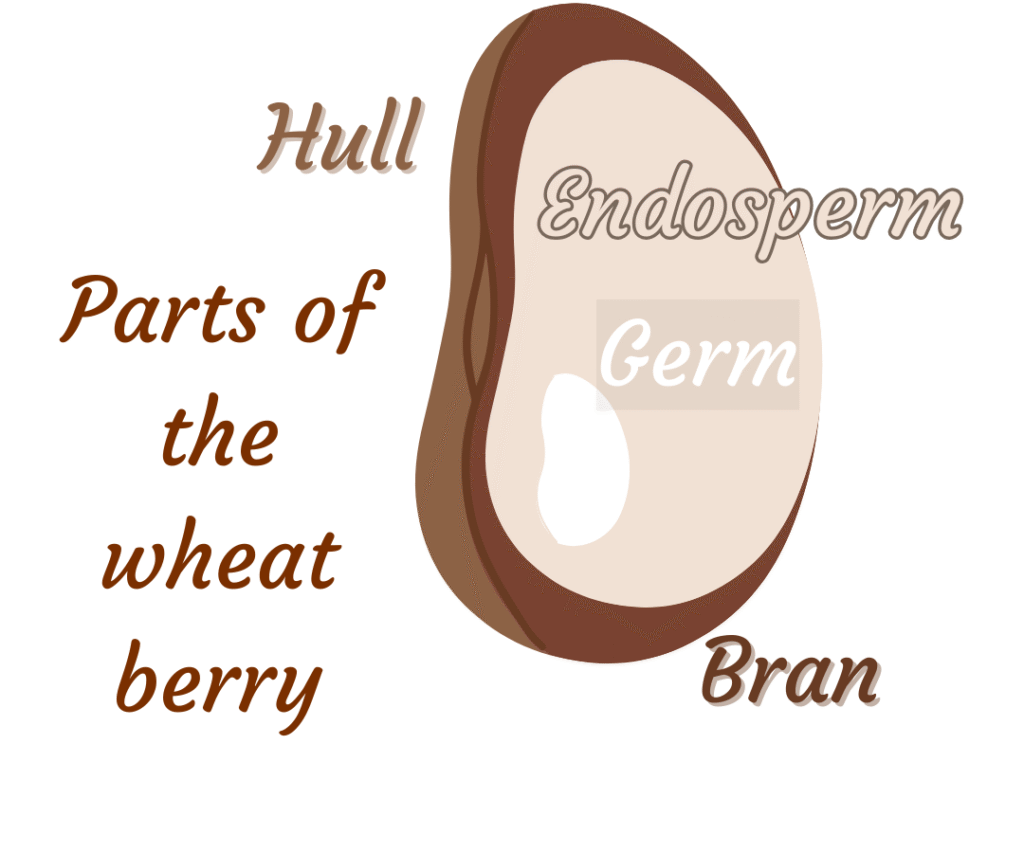
When looking at a kernel of wheat, there are 4 parts. The outer most layer is the hull. The hull protects the seed and is inedible. The next layer going into the seed of wheat is the outer shell that keeps the seed intact and storable, this is called the bran. Inside the bran is the endosperm. The endosperm is a storage pocket of starch the would nourish the seed when it sprouts to give it energy to find light and make roots. The most inner part is the "germ" or core of the seed. The germ is the gene storage area that gives the seed life when growing. The seed of wheat is called a wheat berry.
Storing the Wheat Berry
Wheat berries can be stored forever as long as they are in the right conditions. A cool, dry, bug and animal free container is a perfect place to store grains. Storage buckets with a tight seal and possibly moisture absorbing packets for long term storage will keep the grains fresh. The seeds' bran (protective outer shell) also cannot be broken open. Once broken open, nearly 45% of the nutrition is lost within 24 hours and about 90% the seeds nutrition is lost in about 3 days due to oxidation. Oxidation happens when the seed is exposed to oxygen by crushing or milling the grain.
Think about cutting open an apple, once the inside is exposed to air, the apple starts to turn brown. Also because of the oils found in the seed, once milled, the flour will turn rancid after a few days at room temperatures. Due to how quickly the flour spoils and looses nutrients, it is recommended to use freshly milled flour right away or place in an airtight container in the freezer. Baking or freezing flour keeps the health benefits intact.
Nutrients in the Wheat Berry
Each layer contains nutrients at different ratios. The bran contains about 20% of the riboflavin, 50% of the pantothenic acid, 73% of the vitamin B6, and 86% of the niacin. All of these vitamins together are called vitamin B complex. The endosperm is the biggest part of the wheat kernel and contains 72% of the protein, 43% of the pantothenic acid, about 3% of the thiamin, 6% of the vitamin B6, 12% of the niacin and is mostly starch. The germ is the smallest part of the kernel but is the powerhouse of nutrition. The germ contains 8% of protein, 21% of the vitamin B6, 26% of the riboflavin, 64% of the thiamin, and 100% of the vitamin E. This amazing part also contains fatty acids that are essential for humans. As well as, most of our dietary fiber can be found in the bran and germ.
Nutrients lost when milling and sifting flour.
- Calcium 60%
- Chromium 40%
- Cobalt 88.5%
- Copper 67.9%
- Iron 75.6%
- Magnesium 84.7%
- Manganese 85.8%
- Molybdenum 48%
- Niacin 80.8%
- Pantothenic Acid 50%
- Phosphorus 70.9%
- Potassium 77%
- Riboflavin 80%
- Selenium 15.9%
- Sodium 78.3%
- Thiamin 77.1%
- Vitamin E 86.3%
- Vitamin B6 71.8%
- Zinc 77.7%
Plus some protein, fat, and fiber are lost due to processing flour for shelf life.
Brief History of White Flour
White flour has been around for thousands of years. It was only used for very wealthy classes of people because when sifting flour, a lot of the kernel is lost. Poor people could not afford to lose so much weight of the kernel and needed every part to stay full and healthy. It wasn't until the 19th century, white flour became affordable for everyone.
In 1876, a governor from Minnesota had gone to a French exposition where they showed a rolling mill. It was a machine that could easily separate out the bran and germ from the endosperm by sifting away the "by product". At the time, this was a big deal. This meant that flour could now sit on a shelf and not spoil from the oils found in the germ. Plus it was fast and easier to use than the traditional grain mills. The steal rolling mill was then invented in America to get this white flour to more people around the world. White flour is simply the endosperm, which contains the least amount of vitamins and the most protein and starch. Meaning that the gluten forming properties or proteins now make most of the white flour. Which is a huge problem because we need a balance of all the wheat berry parts to be able to digest it properly.
Diseases Caused by White Flour
The rolling mills became (and is still) the number one way to mill flour. People were very happy they could now make soft fluffy bread and delicates that were once only made by royalty. However, the steal rolling mills wiped out almost all the family owned mills that each town had built itself around. Also, because of the white flour loosing nearing 80% of its nutrients in the sifting processes, three vitamin deficiency diseases starting popping up. Beriberi, a vitamin B deficiency disorder affecting the nervous system. Pellagra, a niacin deficiency disorder causing dementia, dysentery and death. Then anemia, an iron deficiency disorder affecting the blood. The health officials had to figure out why these diseases were all over the country.
By the early 1940s, they traced it back to the germ and bran not being in the flour. They asked the millers to put it back in. The millers said no, they had now sold the germ and bran to the cattle feed industry and were making too much money to stop.
Enriching flour
Health officials then demanded that some vitamins be added into the flour, if not the bran and germ itself. The millers started adding in chemically made vitamin Bs (thiamin, riboflavin, and niacin) and iron to the flour to try to stop the rise in vitamin deficiency disorders. However, there are 40 total nutrients in the wheat berry and only adding 4 back into the white flour cannot be compared. Next on the rise were birth defects of babies due to the lack of folate normally found in un sifted flour. Nothing was done until the late 1990s, when the health officials demand that the flour be enriched with folic acid. Folic acid is a chemically made vitamin to help support early baby development in pregnancy.
On top of all the chemically made vitamins added to the flour, bleaching the flour is still done today. It started because some people didn't like the yellow specks found in milled flour. Companies used a stronger bleach solution that ended up harming people and, in dogs, caused them to have seizures. So they switched to a milder bleach but what do we know about the long term effect of that bleach? Hard to say right now. Unbleached flour can be found on the shelf but it is still enriched with fake vitamins and nutrients. There are some studies that suggest that humans cannot fully absorb the enrichment chemicals or even know how to use them properly. Just a thought, if enriching the flour for all these years, why do we still have vitamin deficiencies and neurological disorders? The deception of flour is real.
Fixing the Flour
Now that we know all the harm sifting, bleaching and enriching flour does, let us fix it. I believe we can be healthy again by changing the flour we consume. I believe we all need to be milling our own flour. Every flour that sits on a shelf in the store has the oils removed. Even the whole wheat or organic flour still gets sifted and oils removed. There are very few companies that mill the wheat and do not sift out the "by product" which is the most important part of the flour to keep our bodies healthy. Milling your own flour is not hard and worth any effort it takes.
I have been milling my own flour for a long time. Before I milled my flour, I used white flour, then unbleached flour. My family was never super sick or deficient because we have always made the effort to eat healthy and real food ingredients. However, since switching to only freshly milled flour recipes, we have seen improved health, both mentally and physically. I am no longer exhausted or suffer intense migraines, I have lost stubborn pregnancy weight, I feel happier and so many more things. My husband had horrible allergies, but now his allergies are rarely a problem or noticed at all. My extended family has seen health improvements in the gut, weight loss and increased energy levels while feeling full and satisfied. I am sure in time I will add more to this list but it is important to completely cut out white flour or enriched flour and start milling your own. For people who feel better when stopping gluten or store bought wheat products, consider an idea that it may not be gluten sensitivity. It may be that your body needs all the wheat berry parts to heal the gut and be able to process the vitamins and minerals the wheat has to offer. I hope that after learning about the deception of flour, we can work together to become a more knowledgeable and healthy place. One family at a time can make a difference.
To see what grain mill I use and how to mill wheat berries, visit Milling Wheat Berries.





23 Comments
Pingback:
Pingback:
Pingback:
Pingback:
Pingback:
Pingback:
Pingback:
Pingback:
Pingback:
Pingback:
Pingback:
Pingback:
Pingback:
Pingback:
Pingback:
Pingback:
Pingback:
Pingback:
Pingback:
Pingback:
Pingback:
Pingback:
Pingback: