
How to make sourdough starter
Sourdough starter is an easy way to rise baked goods. Full of good bacteria and great for your health. All someone needs is flour and water. I use sourdough starter very often, from bread to cookies to crackers and much more. Sourdough has a very nice tangy flavor that I just love. It is also a money saver compared to buying instant yeast packets.
I learned how to make my own sourdough starter over 5 years ago when I wanted to get away from store bought bread. After looking up many recipes and tried everything from potatoes to instant yeast packets to rise the bread. I liked the breads I made but wanted something even simpler to rise my bread. I didn't always have potatoes or packet yeast on hand. After a lot of research, I found my solution. Just flour and water.
A sourdough starter contains wild yeast and bacteria found in your own home and the flour or wheat berries you buy. Rather than buying bleached white flour or unbleached all purpose flour, I buy bulk hard and soft wheat berries to mill into flour. While most people I know do not have a mill, unbleached flour can be substituted but I won't recommend it at this time. When flour is bleached it will not allow wild yeast and bacteria to grow. I also use filtered water, as chlorinated water can kill the good bacteria and yeast in the flour. Once a starter is established, it can last a lifetime.
I use sourdough starter in french bread, bagels, crackers, biscuits and much more. It takes almost a full 24 hours to make these recipes but the health benefits are worth the time if you can manage starting a baked good the day before. The longer you ferment the bread, the less gluten it will have.
Steps for making your own sourdough starter
Making a sourdough starter takes a few days and up to two weeks to establish. The temperature of the location the starter is kept makes a difference on how long it will take. The warmer the temperature, the faster the bacteria and yeast will grow. Make sure you have a warm spot that is away from direct sunlight and not on direct heat.
On Day 1
Mix together one cup of freshly milled hard wheat or unbleached flour with one cup of filtered water with a non-metal utensil in a tall glass or plastic container that holds at least 4 cups. Stir it until it looks like pancake batter. Cover with a cloth and secure with rubber band. Store in warm location.
On Day 2, 3, and 4
After 24 hours, discard or throw away half of the flour water mixture. Add one cup of freshly milled hard wheat or unbleached flour and 1 cup of filtered water. Mix well. Cover and secure with rubber band. Keep in warm location. Repeat every 24 hours until the 5th day.
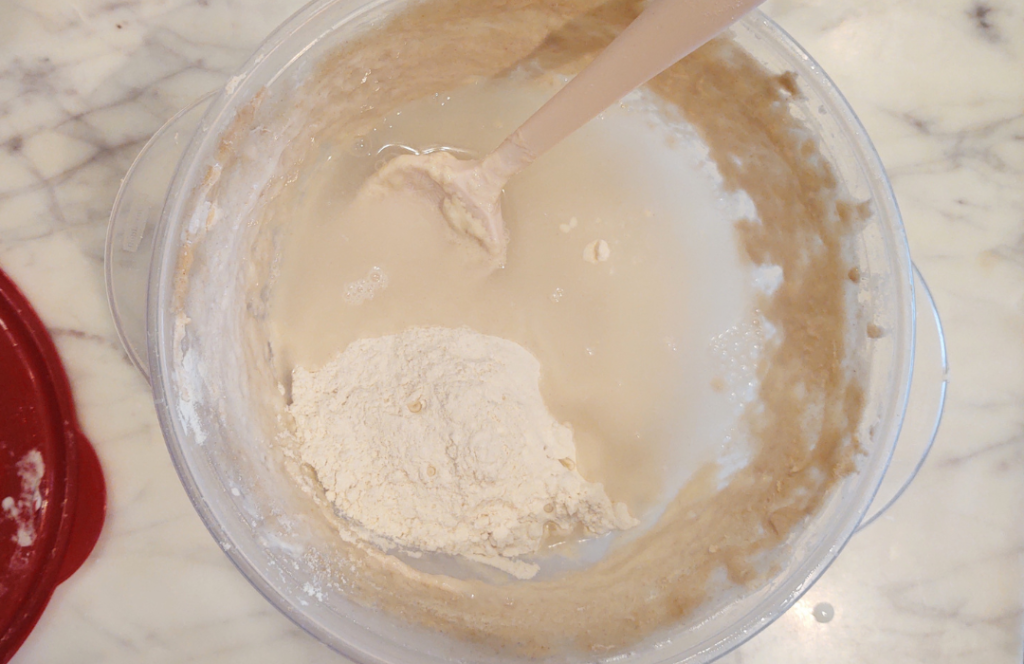
On day 5 and 6
After 24 hours from last mixing, discard again half of the dough or only keep about 1/2 cup in the container. By now you might see the bubbles and the dough rising after feeding/ mixing in new flour and water. Sourdough can double or triple in size and that is a good sign your starter is getting established. At this point some might get a bigger container to hold all the starter after it has risen. Add again 1 cup of unbleached flour and 1 cup on filtered water. Cover and store in warm place. Repeat every 12 hours now.
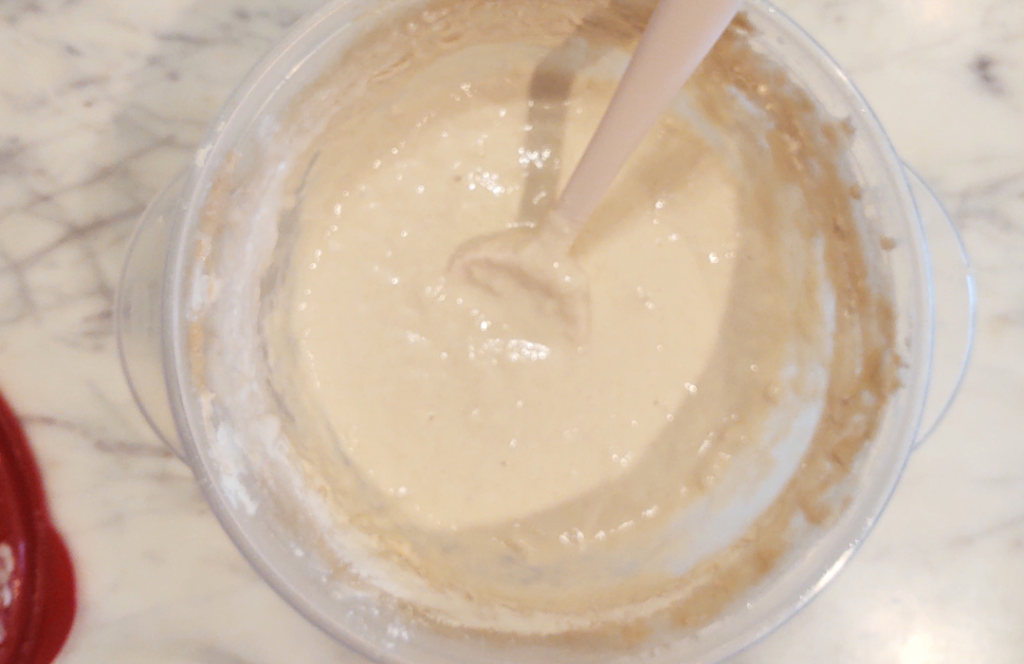
On day 7+
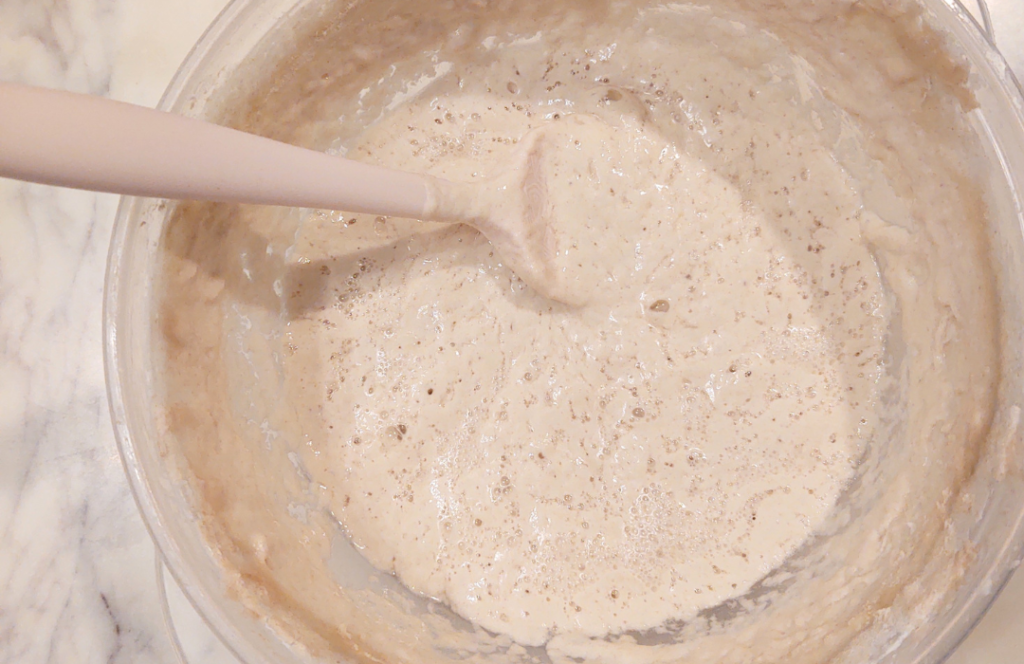
If your starter is consistently rising and falling and making lots of bubbles after each feeding, you have successfully made a sourdough starter. If your dough is not rising or bubbling at this point, continue to discard or throw away the starter mixture until its reduced to 1/2 cup and then add the 1 cup of flour and 1 cup of water every 12 hours. Let's say nothing has happened by day 10, I personally would start over. It may be that your flour isn't fresh, water has chemicals inside, the dough isn't getting enough air or maybe your location isn't the right temperature.
How to store sourdough
Once you have successfully made a sourdough starter, Congratulations! Now it is time to learn how to store it. Many people keep their starter on the counter all the time and feed it every 12 to 24 hours. These people will most likely be using the starter to make breads and baked goods constantly and using the discard with little to no waste. Warmer kitchens make the starter more active and will need to be fed more often.
Other people will store their starter in the refrigerator. If you only plan to use this starter once or twice per week or maybe less, keep it in the fridge for less flour waste. Starter is very forgiving and will do just fine in the cold. It basically slows down the starter from eating the flour mixture and making it less active. Hence, feeding less often. Simply take it out of the fridge at least every 2 weeks to feed it when you don't need it.
After the sourdough starter eats or rises and then falls, it will start to look like it did before it was bubbly. The difference between the two are that the starter will start creating a watery like liquid on the top of the dough and smells strong of yeast called the hooch. It is the byproduct of the starter after it eats. I just pour it off but you can mix it into the starter if you would like. It isn't going to cause harm.
Things to look out for are mold and mildew on the starter or container or smells that are not appealing. If I see anything like that, I would throw it away and start over.




7 Comments
Pingback:
Pingback:
Pingback:
Pingback:
Pingback:
Pingback:
Pingback: