Pavlova
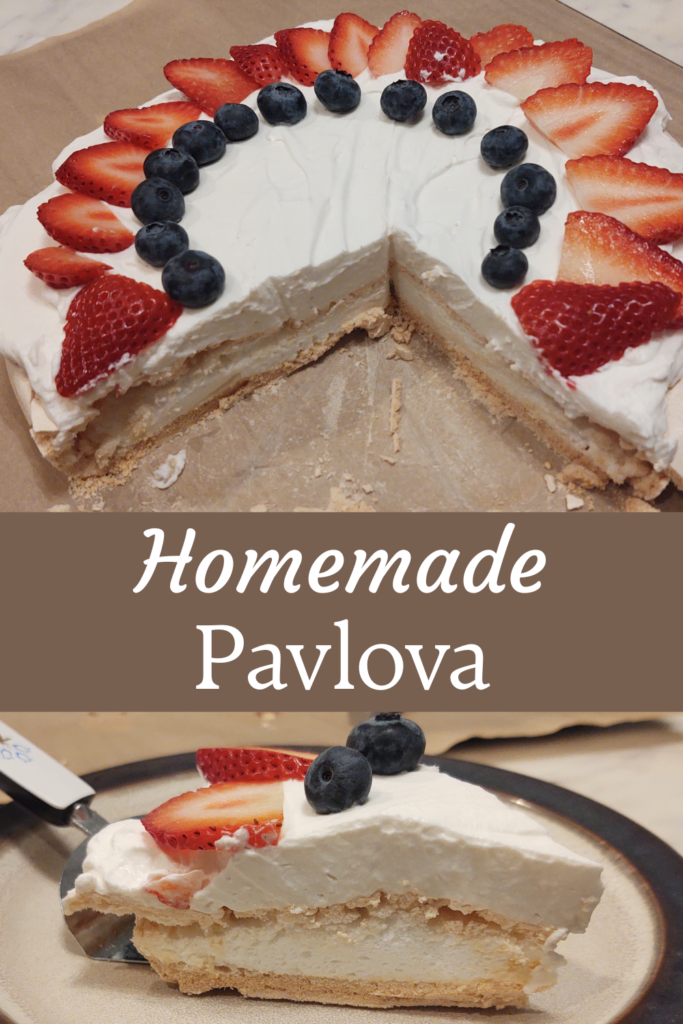
Light and fluffy, delicate dessert made with egg whites and powdered sugar. Top with whipped cream and your favorite fresh fruits! Pavlova is a meringue type cake. It has an airy outer layer that melts in your mouth, while a silky creamy interior. Sweet and delicious that gives summer freshness vibes. My whole family loves pavlova!
How to Make Pavlova
Preheat oven to 350 degrees.
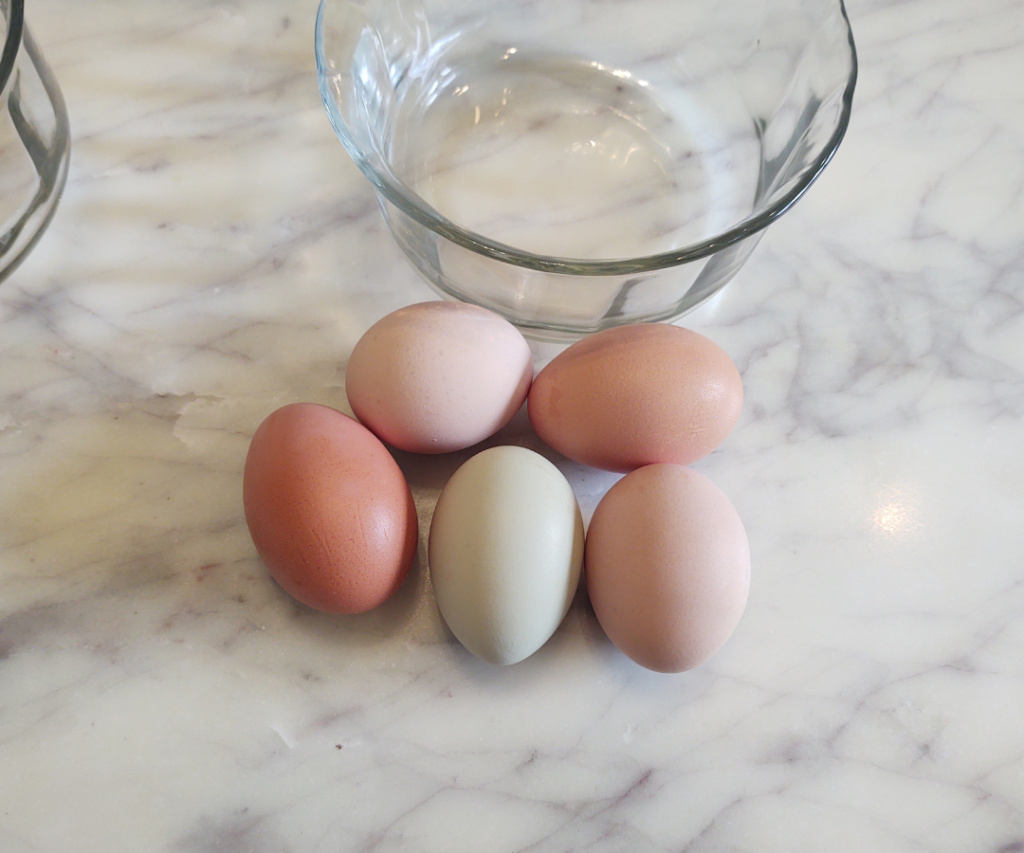
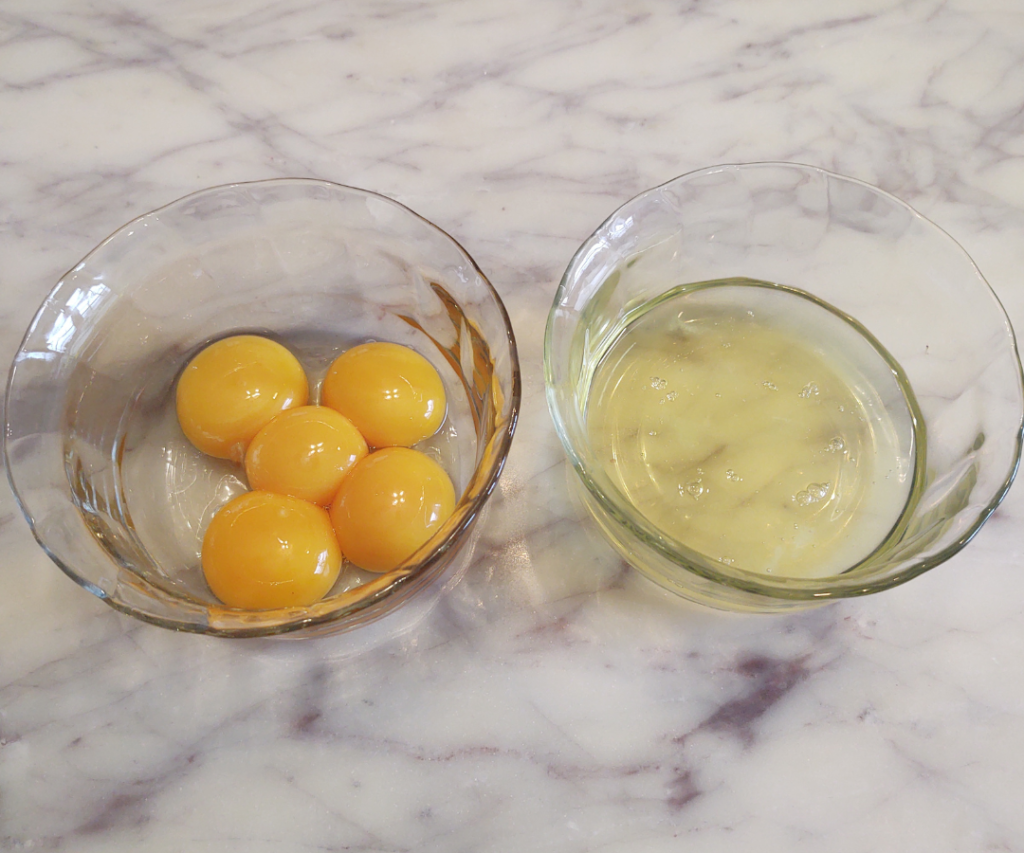
Between two bowls, crack and separate 5 medium to large egg yolks from the egg whites. Absolutely no yolk can get into the egg white bowl for best results.
Measure out 200 grams (about 1 & 2/3 cup) of powdered sugar.
Measure out 1.5 teaspoons of lemon juice and 1 teaspoon of cream of tarter.
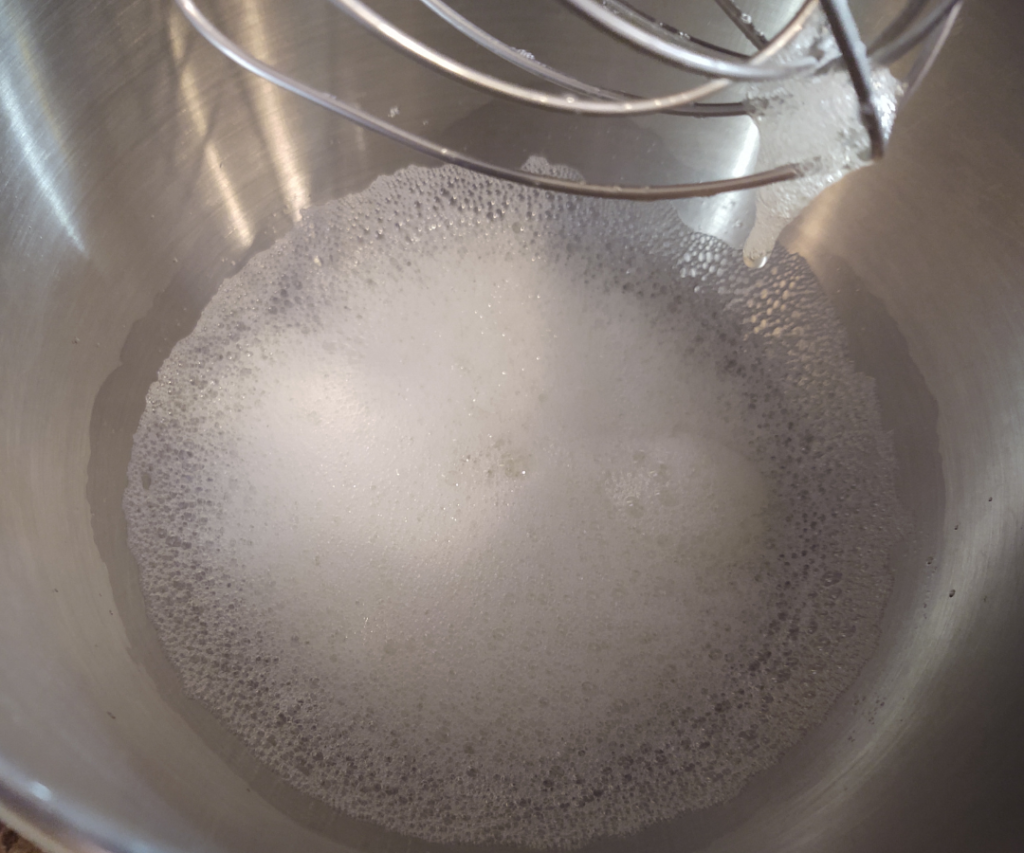
Pour egg whites into a large mixing bowl. Using either a hand or stand mixer on medium/high speed, start to beat the egg whites.

Eggs whites will start to get bubbles and foam up. Keep mixing until the eggs look like they are coming together, turning more white and forming a soft like peek.
Slowly add the powdered sugar while mixing. The eggs will start to look firmer and get glossy.
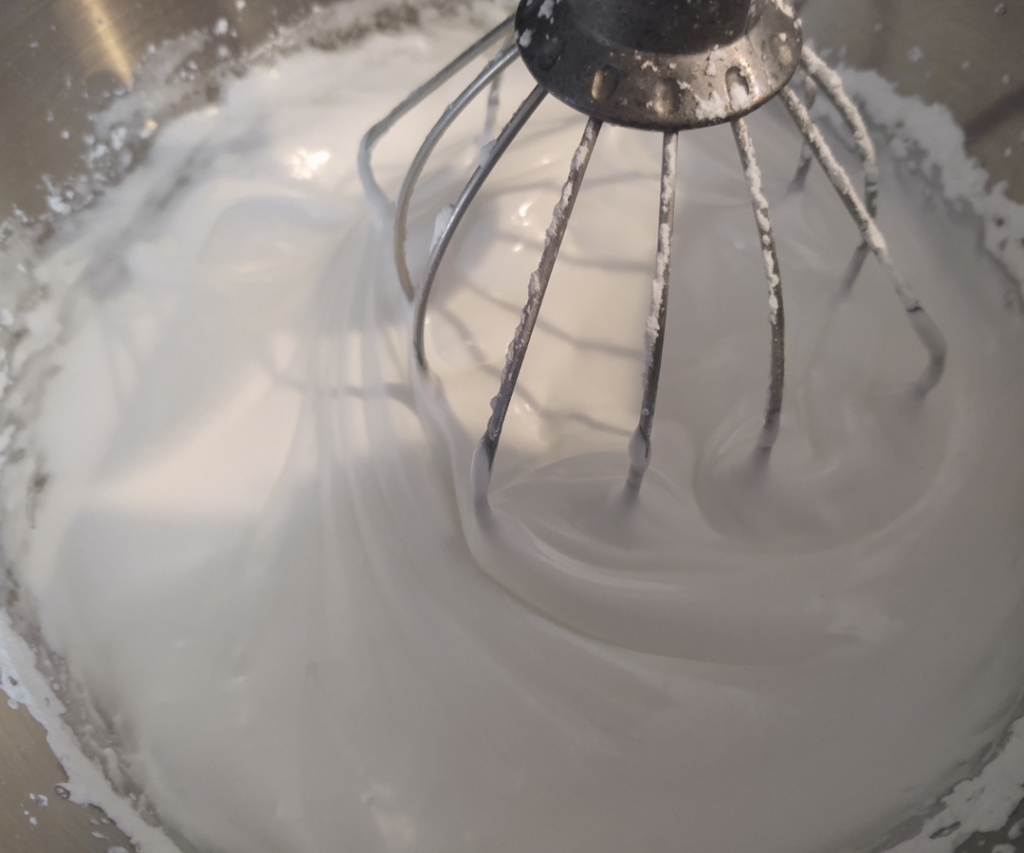
Add the cream of tarter and lemon juice while still mixing. Scrape the sides as needed.

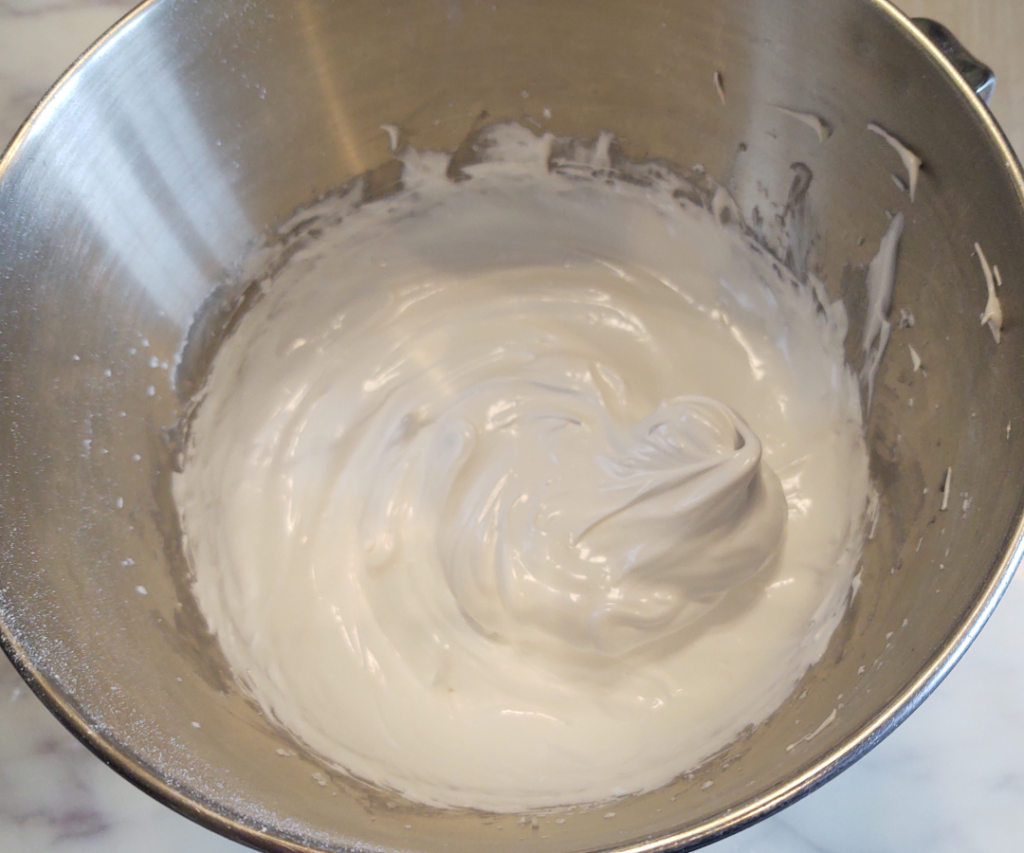
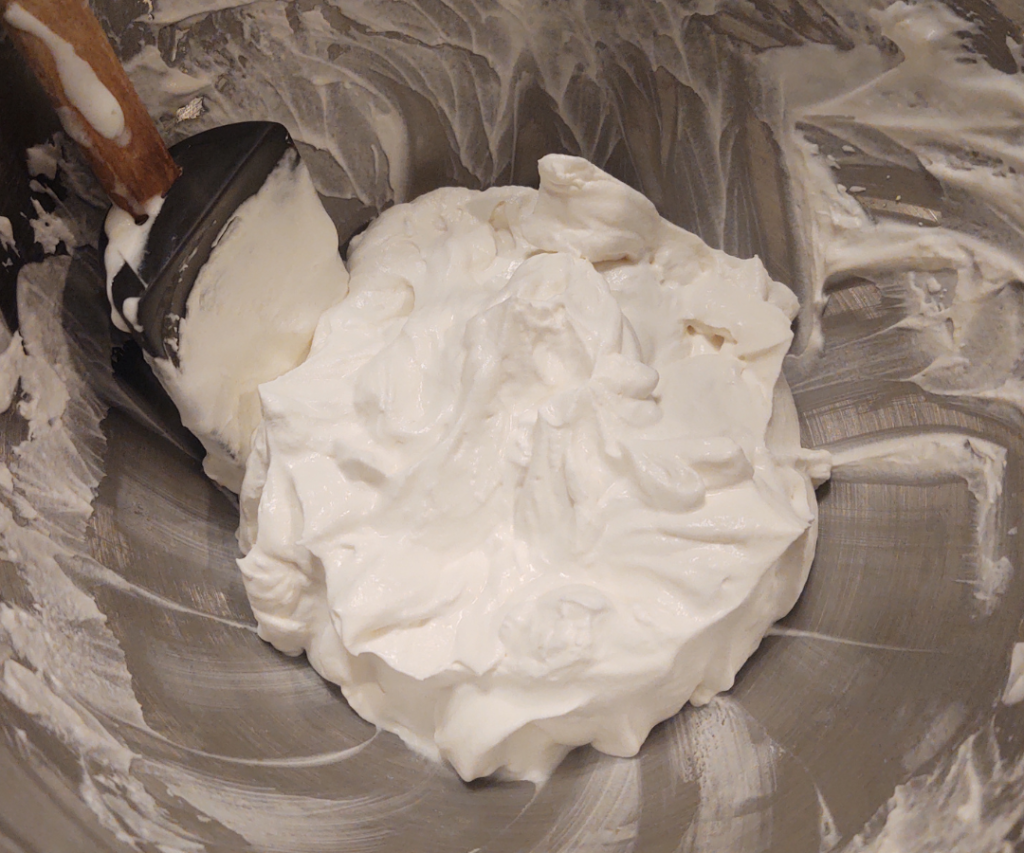
The pavlova mixture is ready once everything is combined well and the beater can be pulled out of the bowl with the stiff white cream sticking and not dripping off.
Line a baking sheet with parchment paper.
Place a small dollop of pavlova cream between the paper and baking sheet corners to prevent the sheet from moving around during shaping.

Scoop the pavlova cream onto the sheet. Aim to make a round shape that is about 8 inches across and no more than 2 inches high.

Pavlova should puff up slightly while baking.
Carefully place the pavlova into the oven.
Once the pavlova is in the oven, no opening the oven. Opening will cause the pavlova to crack and/or fall flat.
Turn the oven temperature to 240 degrees.
Bake for 90 minutes.
Then turn off the oven and allow to rest for at least 2 hours or all day/ night. Resist the urge to open the oven.
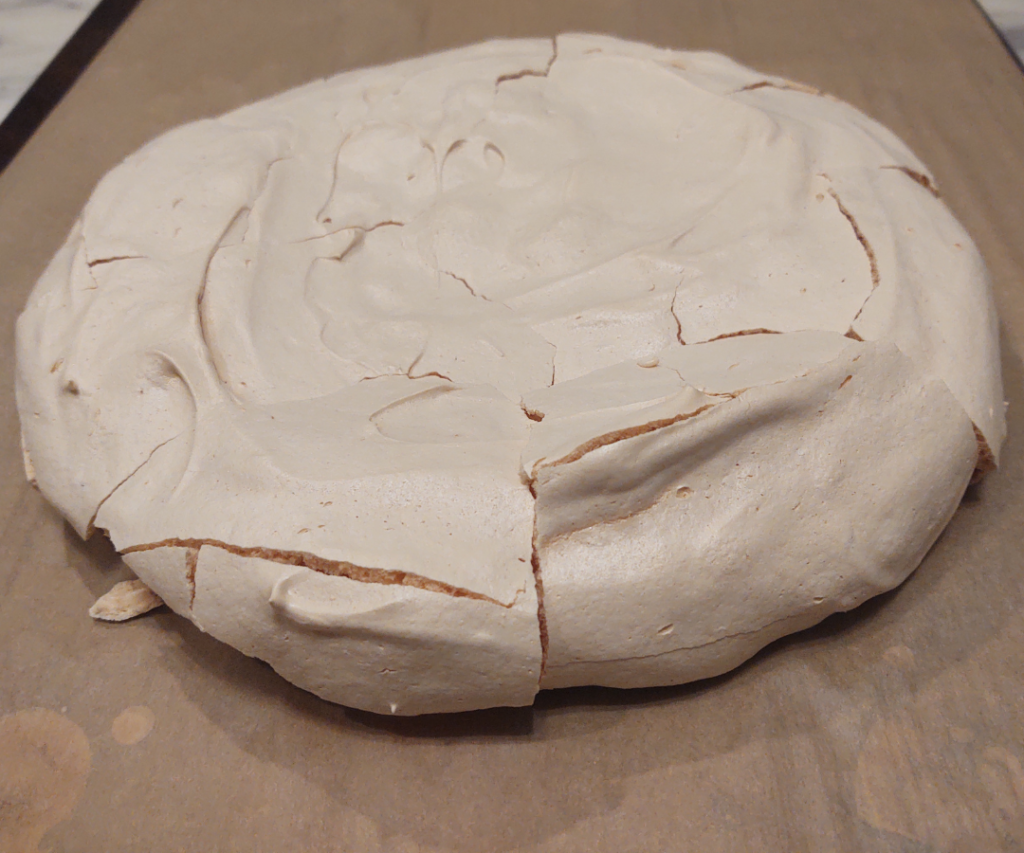
When pavlova is ready, top with whipped cream.
To make whipped cream, I use 2 cups of heavy whipping cream, 1/3 cup of powdered sugar and 1 tablespoon of vanilla extract.
In a large mixing bowl, add cream and beat until the cream is getting light and airy.
Add vanilla and slowly add powdered sugar while mixing. Whipped cream is ready when the cream is well mixed together and sticks to the beater without dripping off.
Lastly add fruit to the top. We use strawberries, blueberries, kiwi, or anything that is in season or sounds good.
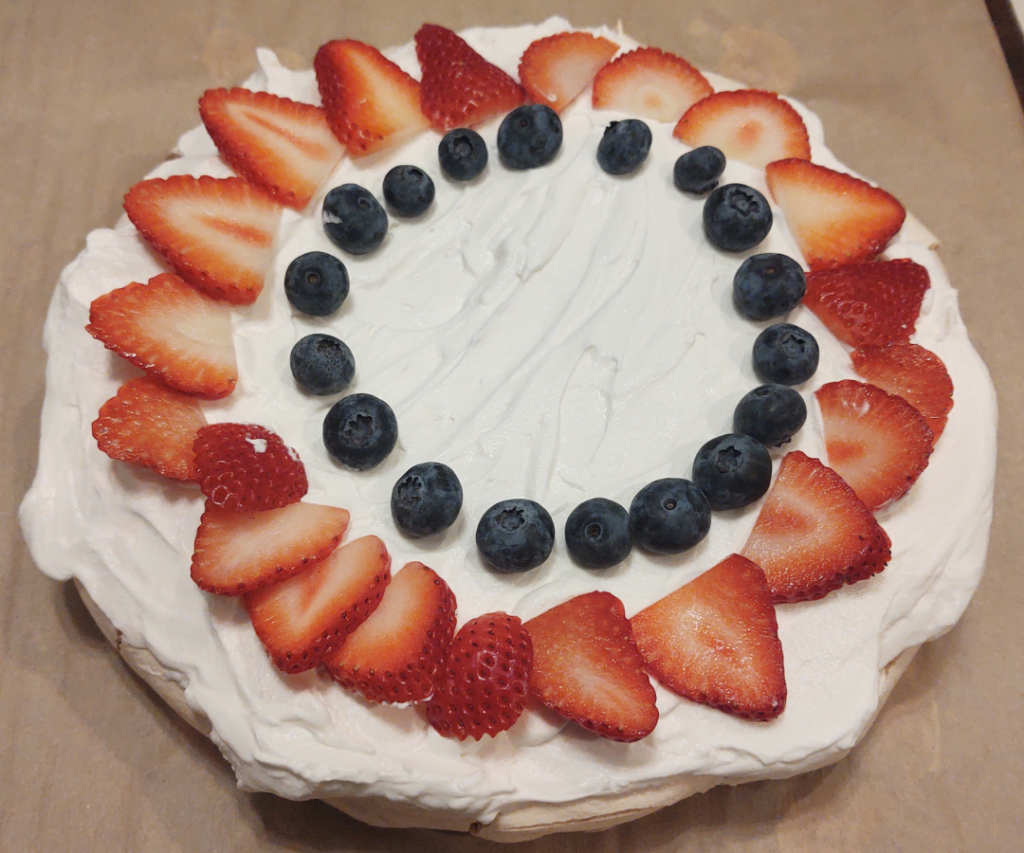
Store in the refrigerator for up to 7 days. Ours is always eaten way before then.

Tips
Pavlova is sensitive to hot humid and rainy conditions and may not cooperate.
It is prone to falling flat or cracking when loss of heat in the oven or bumped around.
The longer it is left in the oven after baking the less likely it will crack.
Even if the pavlova cracks, it STILL tastes good.

Print Recipe
Pavlova
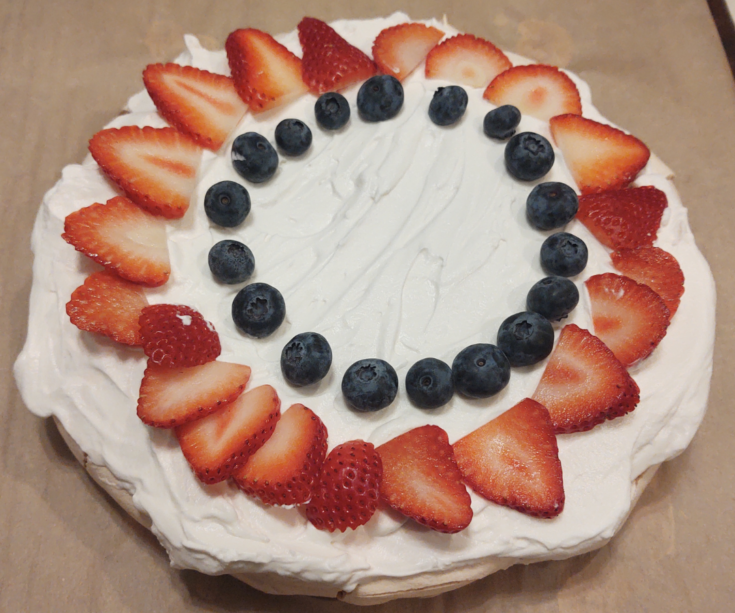
Light and airy melt in your mouth exterior with a creamy and sweet interior. Topped whipped cream and fresh fruit.
Ingredients
- 5 egg whites
- 200 grams (about 1 & 2/3 cup) of powdered sugar
- 1 teaspoon of cream of tarter
- 1 teaspoon of lemon juice
- 2 cups of heavy whipping cream
- 1/3 cup of powdered sugar
- 1 tablespoon of vanilla extract
- Fruits to top with
- Strawberries, blueberries, kiwi, anything you like.
Instructions
- Preheat oven to 350 degrees.
- Between two bowls, crack and separate 5 medium to large egg yolks from the egg whites. Absolutely no yolk can get into the egg white bowl for best results.
- Measure out 200 grams of powdered sugar.
- Measure out 1.5 teaspoons of lemon juice and 1 teaspoon of cream of tarter.
- Pour egg whites into a large mixing bowl.
- Using either a hand or stand mixer on medium/high speed, start to beat the egg whites.
- Eggs whites will start to get bubbles and foam up. Keep mixing until the eggs look like they are coming together, turning more white and forming a soft like peek.
- Slowly add the powdered sugar while mixing. The eggs will start to look firmer and get glossy.
- Add the cream of tarter and lemon juice while still mixing.
- Scrape the sides as needed.
- The pavlova mixture is ready once everything is combined well and the beater can be pulled out of the bowl with the stiff white cream sticking and not dripping off.
- Line a baking sheet with parchment paper.
- Place a small dollop of pavlova cream between the paper and baking sheet corners to prevent the sheet from moving around during shaping.
- Scoop the pavlova cream onto the sheet.
- Aim to make a round shape that is about 8 inches across and no more than 2 inches high. Pavlova should puff up slightly while baking.
- Carefully place the pavlova into the oven.
- Turn the oven temperature to 240 degrees.
- Once the pavlova is in the oven, no opening the oven. Opening will cause the pavlova to crack and/or fall flat.
- Bake for 90 minutes.
- Then turn off the oven and allow to rest for at least 2 hours or all day/ night. Resist the urge to open the oven.
- When pavlova is ready, top with whipped cream.
- To make whipped cream, I use 2 cups of heavy whipping cream, 1/3 cup of powdered sugar and 1 tablespoon of vanilla extract.
- In a large mixing bowl, add cream and beat until the cream is getting light and airy.
- Add vanilla and slowly add powdered sugar while mixing.
- Whipped cream is ready when the cream is well mixed together and sticks to the beater without dripping off.
- Lastly add fruit to the top. We use strawberries, blueberries, kiwi, or anything that is in season or sounds good.
Amazon Storefront
Wondering what I use at the homestead? I have created a storefront to show some of the items I buy from Amazon and use. I earn a small commission if you buy from my storefront. CLICK THIS LINK.


You May Also Like
Vanilla Ice Cream

Graham Crackers with Freshly Milled Flour